

By Fr. Michael Psaromatis
Greek Orthodox Archdiocese of Australia
Life in summer carries an intensity. Days are bright and stretched, and heat settles heavily. Summer holidays are intertwined with anticipation and pressure. Some families travel, others remain home, balancing work commitments with the constant presence of children whose routines have dissolved into long, open days. Parents move between emails and meals, trying to offer patience and joy while being pulled in several directions at once. Time loses its edges. Beneath the brightness and noise, many thirst for the “living water”.
The feast of Theophany speaks directly to this season of life by leading us to the Jordan River.
The river runs through open land beneath a wide sky, its waters steady and unhurried. Saint John the Forerunner stands along its bank, clothed in simplicity, calling the people to prepare the way of the Lord. His voice calls hearts to turn and make room. From homes shaped by routine, and strain, people move toward the water. Some arrive carrying sins they recognise clearly. Others come with weariness, disappointment, or a longing they struggle to name. Many arrive simply because something within them draws them forward. The Jordan becomes a meeting place where expectations are quietly laid down.
John stands by the river as one who prepares a place for the Lord. He keeps watch, calls hearts to readiness, and waits beside the water. His preparation takes shape through repentance, through the steady turning of the heart toward God, and through the willingness to set aside what no longer gives life. John does not claim the moment for himself. He points beyond himself to the One who is coming. In this way, he becomes an image of how the Church waits for Christ in every generation.
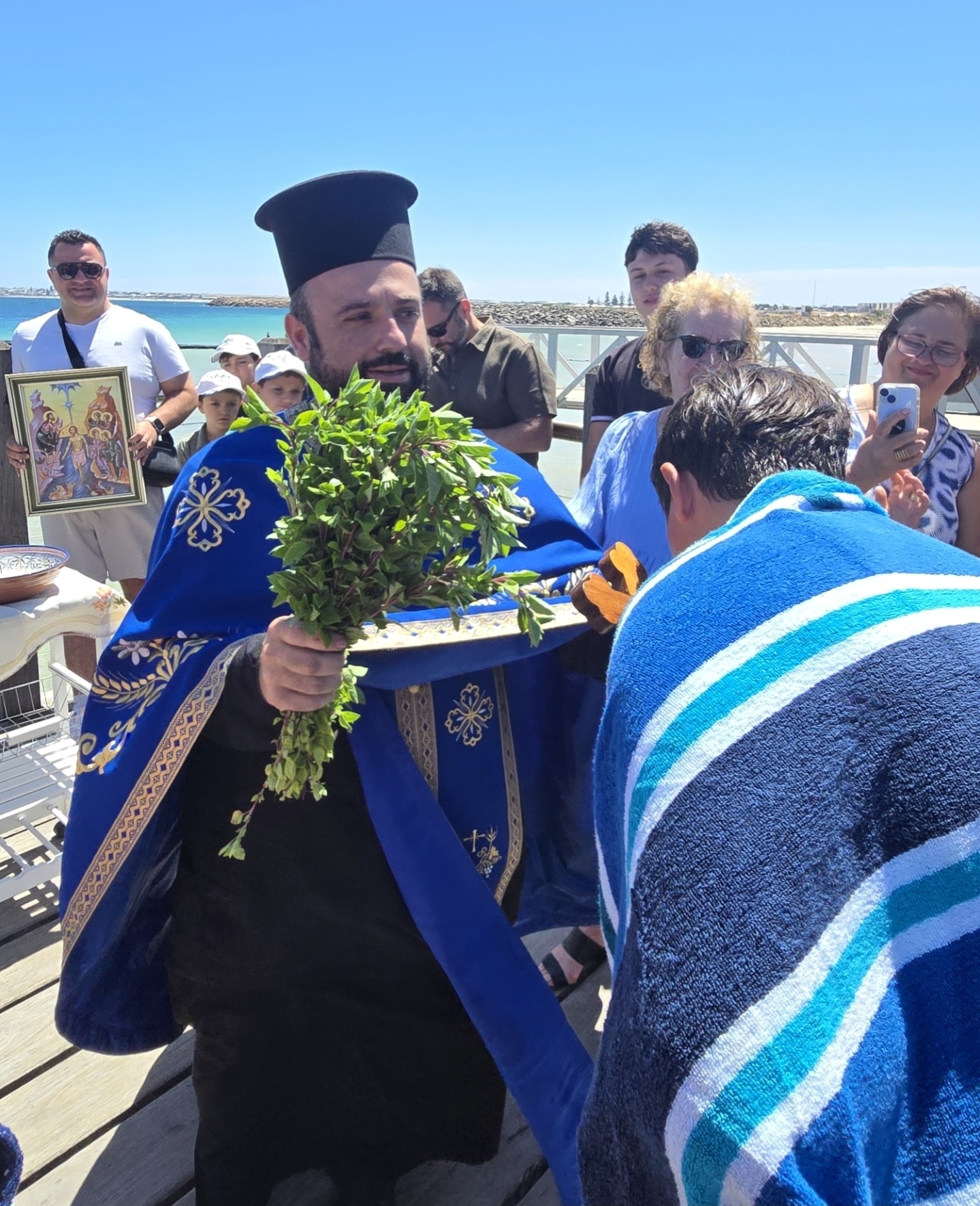
This ministry of preparation does not remain in the wilderness. It takes visible form in the life of the Church, especially at Theophany. As John stood at the Jordan, so the priest is sent out during these days, carrying the Cross, the basil, and the Holy Water. He moves from house to house as to many small streams of the Jordan, entering homes full of work, laughter, mess, and care. Like John, the priest brings nothing of his own. He prepares, blesses, and steps aside, allowing Christ to enter and sanctify what is already there.
Christ stands in the place of sinners without sin, entering the waters so that nothing in creation remains untouched by His presence.
In Australia, Theophany arrives in the height of the hottest month and the summer holidays. People come to church with light and sweltering heat clinging to them, some straight from holidays, others from family commitments that feel busy in their own way. Church doors and windows stand open against the heat. Sunlight settles across the floor near the font. The scent of basil mingles with incense. Children shift in sandals. Parents pray in fragments, attentive and distracted at once, grateful simply to stand before the water. Many carry some memory of their own baptism, whether clear or faint.
Into this gathering Christ comes.
The Evangelist tells us that Jesus comes from Galilee to John at the Jordan to be baptized by him. The One through whom all things came into being approaches the river. John senses the weight of the moment and speaks from humility shaped by truth: “I have need to be baptized by You, and You are coming to me.”
Christ responds, “Allow it now, for this is fitting for us to fulfill all righteousness,” and He enters the water freely.
He descends, standing among those who seek healing. In this descent, the Church recognises the kenosis of the Son, divine life revealed through self-giving humility. Christ stands in the place of sinners without sin, entering the waters so that nothing in creation remains untouched by His presence.
As Christ stands in the river, creation responds. The heavens open. The Holy Spirit descends in the form of a dove, recalling the Spirit who hovered over the waters at the beginning. The voice of the Father is heard: “This is My beloved Son, in whom I am well pleased.”
The Son stands in the waters. The Spirit rests upon Him. The Church hears in this moment the ancient proclamation: the voice of the Lord is upon the waters.
This is Theophany. God appears within creation. Water receives the presence of its Creator and becomes a place where divine life is made known.
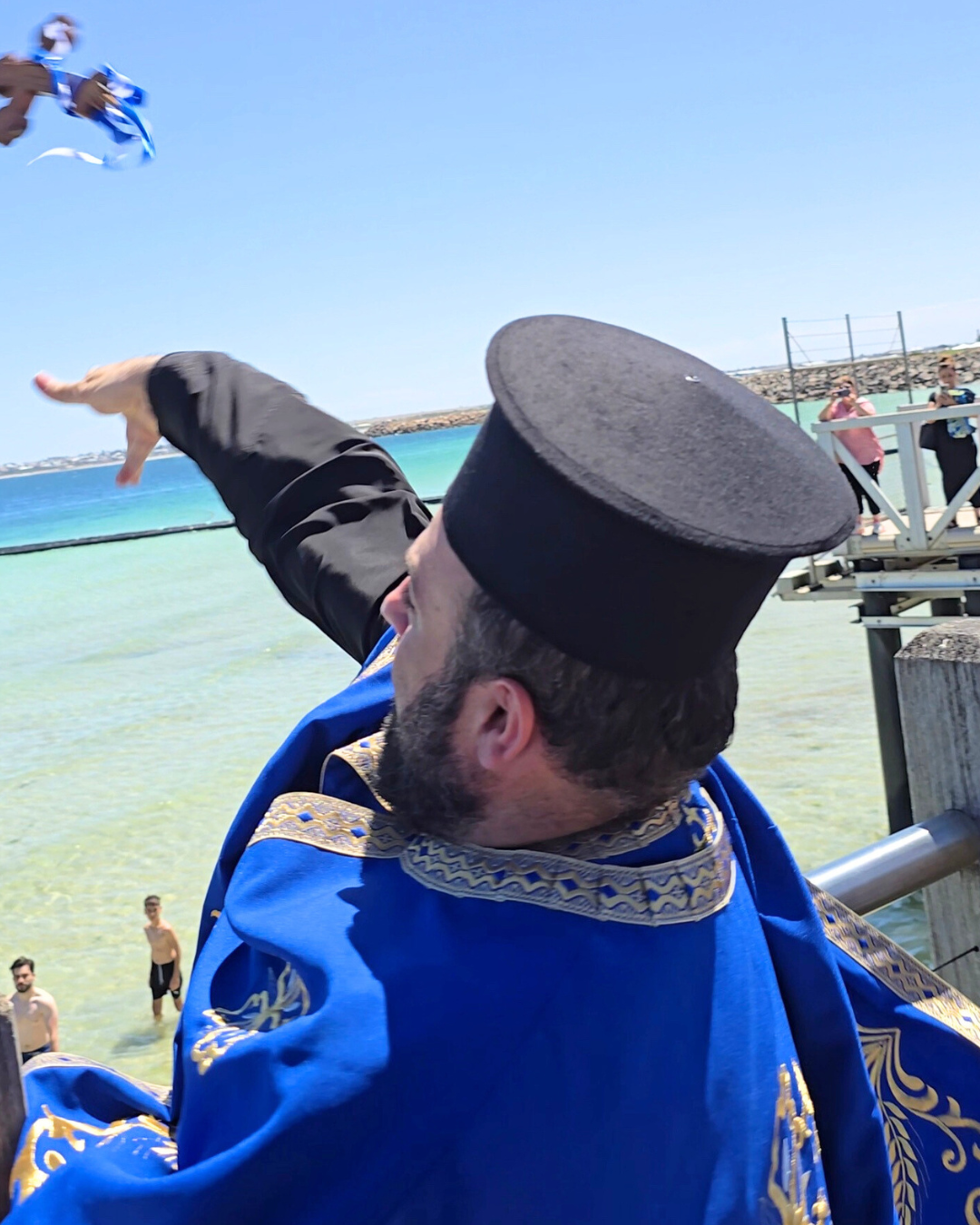
The Church receives this feast as the first great public manifestation of Christ. At His Nativity He was revealed quietly to chosen witnesses. At the Jordan He stands openly before the people, and the life of God is disclosed within the world. Saint Gregory the Theologian calls this feast illumination, because through it creation begins to see its true end and purpose.
From this moment, the whole story of Scripture comes into focus. Water stands at the centre of God’s work. God gathers the waters at creation. He plants Eden and sets a river flowing through the garden as a sign of life received and shared.
The Holy Fathers speak of creation as held in being by God’s presence. Saint Basil describes the world as standing because God wills it to stand. Saint Gregory Palamas speaks of divine life active within creation, giving light, strength, and breath to all things. Thanksgiving shapes the human response to this gift and orientates life toward God.
Within this world the human person receives a priestly calling. Saint Maximus the Confessor describes humanity as standing between heaven and earth, offering creation back to God in thanksgiving. Saint Paul urges believers to present their lives as a living sacrifice.
Many who stand at the Jordan, within their parish churches, arrive bearing divided attention, and the weight of daily responsibility. The summer light exposes weariness and creation itself stretches forward toward the freedom prepared in Christ.
Into this shared longing Christ steps into the Jordan.
He enters the river and sanctifies it from within. The hymn of the feast proclaims that today the nature of the waters is sanctified. In this act, the renewal of creation begins its visible course.
This mystery receives its fullest liturgical voice in the Great Prayer of the Blessing of the Waters. The prayer gathers the whole history of salvation into a single offering. It recalls the Spirit over the waters at creation, the flood, the Red Sea, the water from the rock, and the Jordan that received Christ. The Church asks that the same Holy Spirit descend again, sanctifying the water through the presence of the Cross, making it a source of healing, purification, protection, and renewal. What is sanctified here is not water alone, but creation itself, set again on the path toward transfiguration.
Holy water remains in the home after the visit. It is placed near the icons and used with intention: a sip before school, a blessing before travel, a prayer during illness or anxiety.
What begins at the font continues in the home.
In the days following Theophany, the Cross and holy water move beyond the church walls and enter the places where daily life unfolds. The priest carries what has been sanctified as the continuation of the feast itself. Homes receive the blessing within the flow of ordinary life. Doors open. Children move through rooms. Meals wait on benches. And space is made.
Each home carries its own rhythm. Some are full and energetic, voices overlapping, children in constant motion. Others move at a slower pace shaped by age, illness, or quiet routines. In every case the same action takes place. The Cross is raised. The prayer is offered. Basil touches walls marked by years of family life. Holy water falls across thresholds, tables, bedrooms, school bags, photographs, and toys left where they were last used. Christ is welcomed into the home as a living presence.
Hospitality emerges naturally as plates appear without fuss. Cold water is pressed into hands. Fruit, biscuits, and chocolates arrive from cupboards already opened for guests. Children proudly carry out whatever they have been asked to bring. By the end of home blessings, a priest has seen and possibly consumed every brand of chocolate available in the universe. Like the Magi, households bring what they have and place it before Christ by welcoming His servant. In that exchange, blessing is received and generosity is given as part of the same movement.
Often the visits take place under the full heat of summer. Fans are turning, and windows remain open. Children hover carrying the scent of chlorine and sunscreen. Parents comment briefly on noise or clutter, then fall silent as prayer begins. The blessing meets the household as it stands.
Sometimes curiosity sets the tone as a child looks from the Cross to the pool and asks whether I will be jumping in as well. I reply that the Jordan has already been entered today. Laughter follows, and attention gathers.
Questions come easily. Does the pool water become holy? Does swimming in it make a difference? Parents smile and listen. A mother remarks that perhaps the children should stay in the water longer if it helps them be better behaved. Her husband replies that the idea deserves consideration. The exchange settles the room.
I say that the blessing teaches us how to receive what God gives. Water touched by prayer is approached with care and gratitude. Ordinary water, is now treated differently. The children nod. The adults remain quiet.
After the prayers, the children approach to venerate the Cross, still wet from the pool, towels over their shoulders, feet leaving marks on the tiles. They come freely. The house settles.
Holy water remains in the home after the visit. It is placed near the icons and used with intention: a sip before school, a blessing before travel, a prayer during illness or anxiety. Over time, the presence of the holy water shapes the rhythm of the household.
Theophany stands at the centre of the Church’s proclamation about the world. God has revealed Himself. Creation receives blessing. Renewal unfolds through the prayer of the Church as homes, families, and daily life are gathered into the one Body of Christ. The waters have been sanctified, and they now pass through kitchens, backyards, and ordinary days, teaching the Church again how to receive the world as gift, and to live within it with reverence.
*****
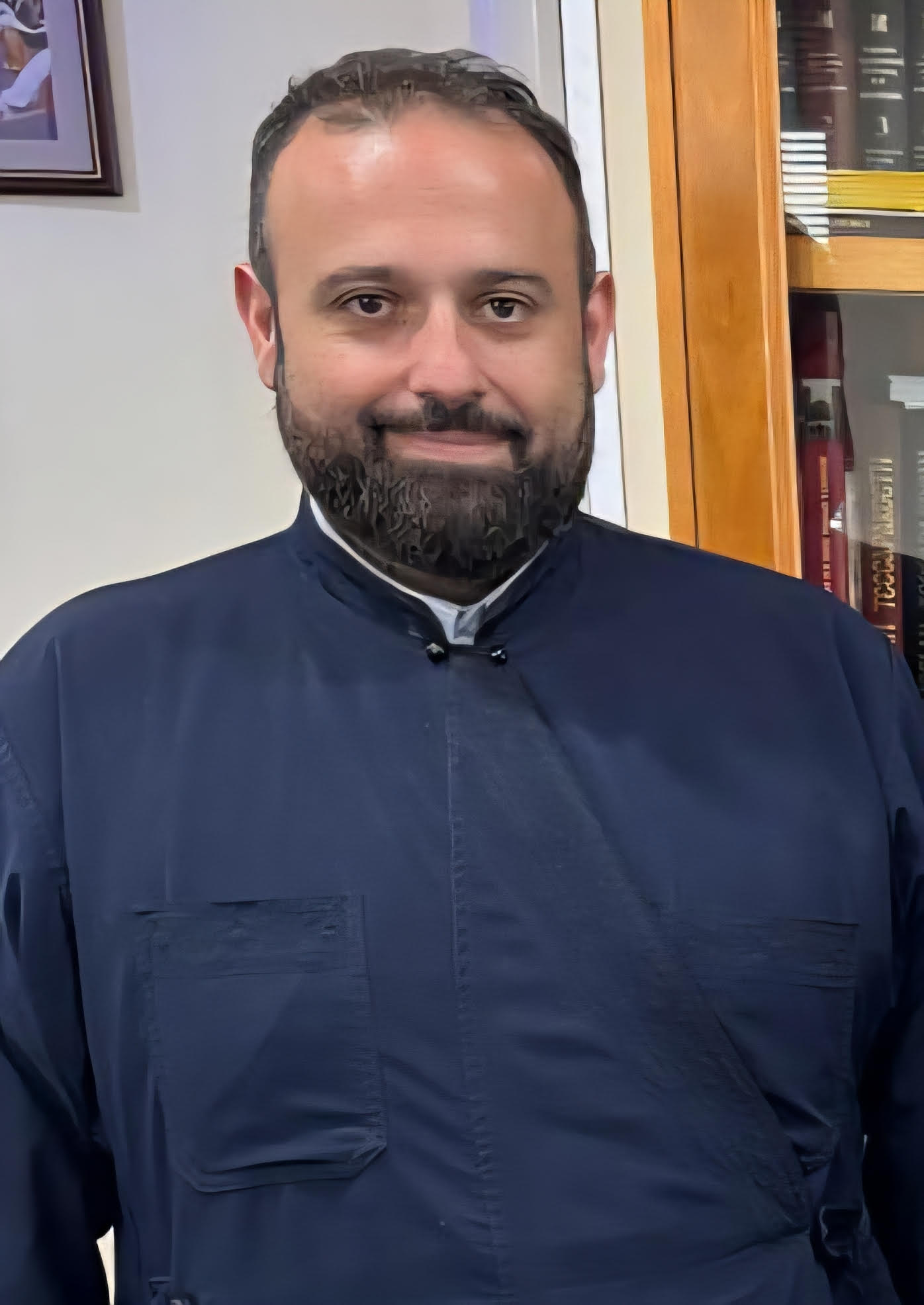 Fr Michael is a priest of the Greek Orthodox Archdiocese of Australia. He has studied Information Technology, Modern Greek, and Theology at Flinders University. With a deep love for music, theology, and arts Fr Michael brings a dynamism to his ministry.
His 13 year ministry has included service in aged care, the youth, regional communities, and meeting the needs of busy Parishes with Presvytera Stavroula.
Fr Michael is also actively involved in Orthodox missionary outreach in the Pacific, particularly in Fiji. He has spent time in the region serving liturgy, engaging with local communities, and working towards the development of the mission.
He is currently serving at the Parish of St Dimitrios, Salisbury, in South Australia.