

And He came to Nazareth, where He had been brought up; and He went to the synagogue, as His custom was, on the Sabbath day. And He stood up to read; and there was given to Him the book of the Prophet Isaiah. He opened the book and found the place where it was written,
“The Spirit of the Lord is upon Me, because He has anointed Me to preach good news to the poor. He has sent me to proclaim release to the captives and the recovering of sight to the blind, to set at liberty those who are oppressed, to proclaim the acceptable year of the Lord.”
And He closed the book, and gave it back to the attendant, and sat down; and the eyes of all in the synagogue were fixed on Him. And He began to say to them, “Today this Scripture has been fulfilled in your hearing.” And all spoke well of Him, and wondered at the gracious words which proceeded out of His mouth; and they said, “Is not this Joseph’s Son?” And He said to them, “Doubtless you will quote to Me this proverb, ‘Physician, heal yourself; what we have heard You did at Capernaum, do here also in your own country.’” And He said, “Truly, I say to you, no prophet is acceptable in His own country. But in truth, I tell you, there were many widows in Israel in the days of Elijah, when the heaven was shut up three years and six months, when there came a great famine over all the land; and Elijah was sent to none of them but only to Zarephath, in the land of Sidon, to a woman who was a widow. And there were many lepers in Israel in the time of the Prophet Elisha; and none of them was cleaned, but only Naaman the Syrian.” When they heard this, all the synagogue were filled with wrath. And they rose up and put Him out of the city, and led Him to the brow of the hill on which their city was built, that they might throw Him down headlong. But passing through the midst of them He went away.
Luke 4: 16-30
After the temptation of Christ, He returned home to Nazareth. He had grown up there. He was now thirty years old. He was known as Joseph’s son. He had worked as a carpenter with His earthly father. He also went to the synagogue regularly. He was known by those in the synagogue as well.
The baptism of Jesus, which we just celebrated, had been very public, compared to the Nativity. We don’t know how many people witnessed the baptism, it could have been dozens, maybe even hundreds. It certainly would not have been the entire Jewish leadership, or even His whole hometown. When we baptize a baby in the church today, we invite people and make a celebration out of it. At the time of Jesus, baptism functioned similarly to how we do confession today. It was a private encounter between the one being baptized and the one doing the baptism. There would, of course, been other people nearby, waiting their turn to be baptized.
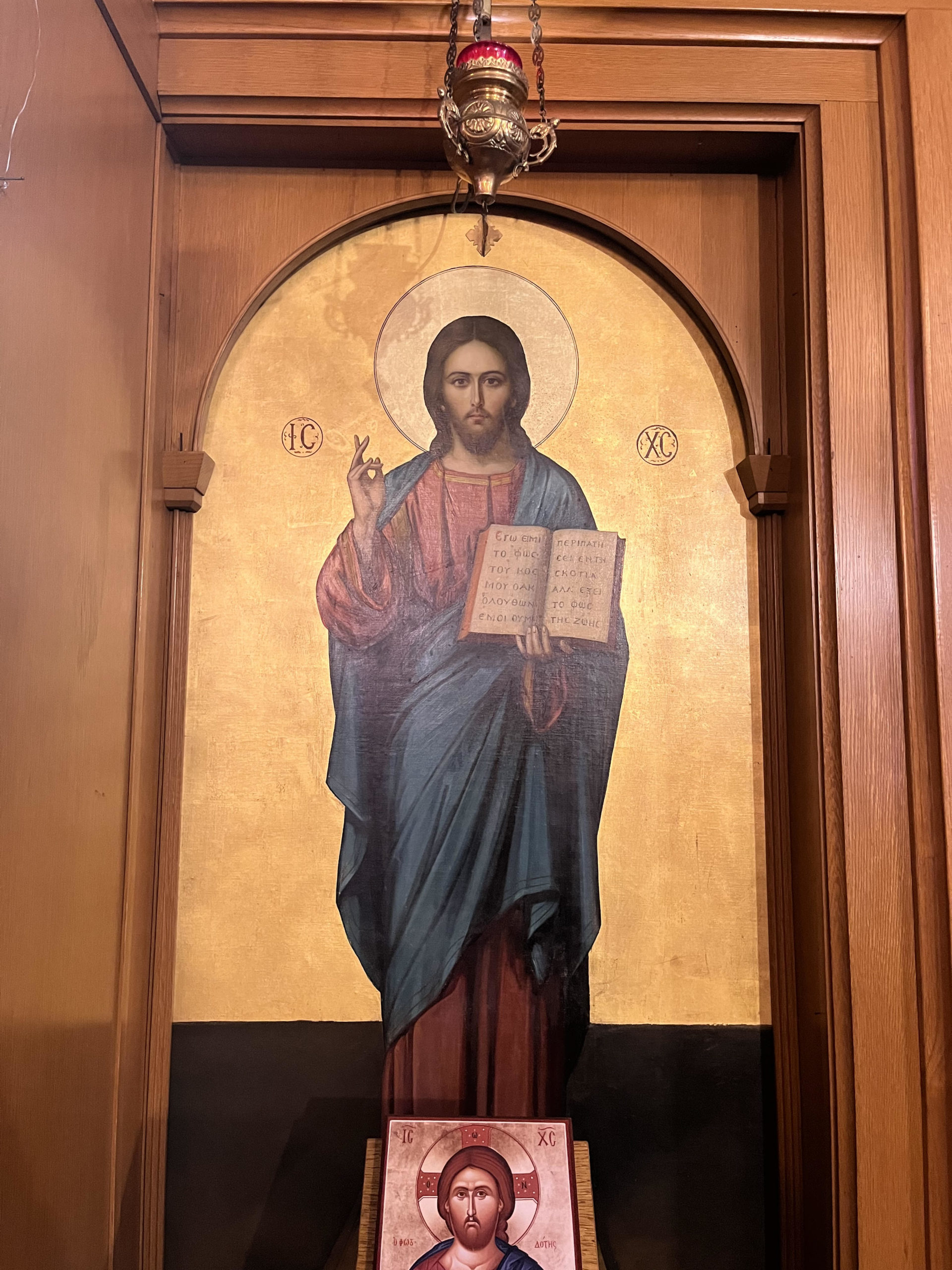
After the baptism, the forty-day temptation of Christ was a private affair, a personal struggle between Christ and the devil. Having fasted and having prepared Himself for His ministry, He returned to Nazareth. Again, going to the temple, as was His custom, He was handed the book of Isaiah to read. At that time, the Scriptures were written on large scrolls. There wasn’t a small Bible with all of the Scriptures in it. There weren’t pages to turn. There would have been a large scroll for each book of Scripture and one would have to unroll the scroll to the passage that was to be read. Jesus was given the scroll of the book of Isaiah. Perhaps that was the prescribed reading for that day, we don’t know. But when Jesus was handed the scroll, He found the place where it was written “The Spirit of the Lord is upon Me, because He has anointed Me to preach the good news to the poor. He has sent Me to proclaim release to the captives and recovering of sight to the blind, to set at liberty those oppressed, to proclaim the acceptable year of the Lord.” (Luke 4:18-19) The Jewish leaders would have known these Messianic signs, signs that the long-promised Messiah was in their midst. Jesus, having read these Messianic signs, then says to those in attendance, “Today this Scripture has been fulfilled in your hearing.” (4:21) He reveals Himself as the one spoken of in Scripture hundreds of years before. The promise of a Messiah is now being fulfilled in His person.
The reaction initially is good. People speak well of Jesus. But the tables quickly turn. They ask if He is Joseph’s son? The next thought naturally is how would the son of a simple carpenter, a carpenter Himself, be the fulfillment of Scripture for a Messiah, a Savior, a deliverer? Jesus, as if reading their minds, tells them that their next move would probably be to request miracles, such as Jesus had done in Capernaum. And continuing, He says “Truly, I say to you, no prophet is acceptable in His own country.” It is interesting to note that the idea of a prophet having no honor and not being accepted in His own country finds its way into all four of the Gospels, though it occurs later in the ministry in each of the other three.
The conversation eventually goes sideways. The people who had only a short time before spoke well of Jesus and wondered at the gracious words which proceeded out of His mouth (4:22), now not only want to throw Him out of their city, they want to actually kill Him. They take Him to the top of the hill on which their city was built and try to throw Him off of it, but He passes through their midst and goes away. He is rejected by His own people, and goes to Galilee, which is primarily Gentile (non-Jewish) territory.
All of this is preparing Jesus for ministry, a ministry that will extend to both Jews and Gentiles. His rejection has purpose. Complete acceptance by the Jews could have set up His ministry as exclusive to them. His rejection by His own people sets the stage for the ministry to be extended to the Gentiles, and also for the Jews who will follow, it sets up the concept of faith, because they will have to reject their leaders and follow Him, which will be a real test of faith.
For us who are reading this Gospel two thousand years later, the takeaway is that when we follow after Christ, life does not necessarily get easier in the short term. There is temptation from the devil. He is not tempting the one who has already fallen, but the one who is seeking righteousness. And when one proclaims His faith in Christ, especially in the world today, there is the potential for dismissal and rejection. It’s amazing how two thousand years later, the journey of Christ is our journey as well. He showed how to pass through both temptation and rejection, setting an example for us who follow Him today.
Lord, I greet You this day with a prayer that You will strengthen me in times of temptation and rejection. I want to follow, I want to follow faithfully. But there are forces at play around me that seek to take me off my path to salvation. Some of those forces are temptation (meditate on your temptations) and some of those are rejection. Give me strength to fight off temptation and give me resolve to fight off rejection. However this journey goes in the short term, give me the eyes to see the long term goal of salvation and to keep that in front of me today and every day. Amen.
The journey to Christ is not easy. There will be temptation and rejection along the way. This underscores, among other things, the importance of being part of a church community, where our personal faith is accepted and encouraged.