
“But when the Counselor comes, whom I shall send to you from the Father, even the Spirit of truth, who proceeds from the Father, He will bear witness to me.”
John 15:26
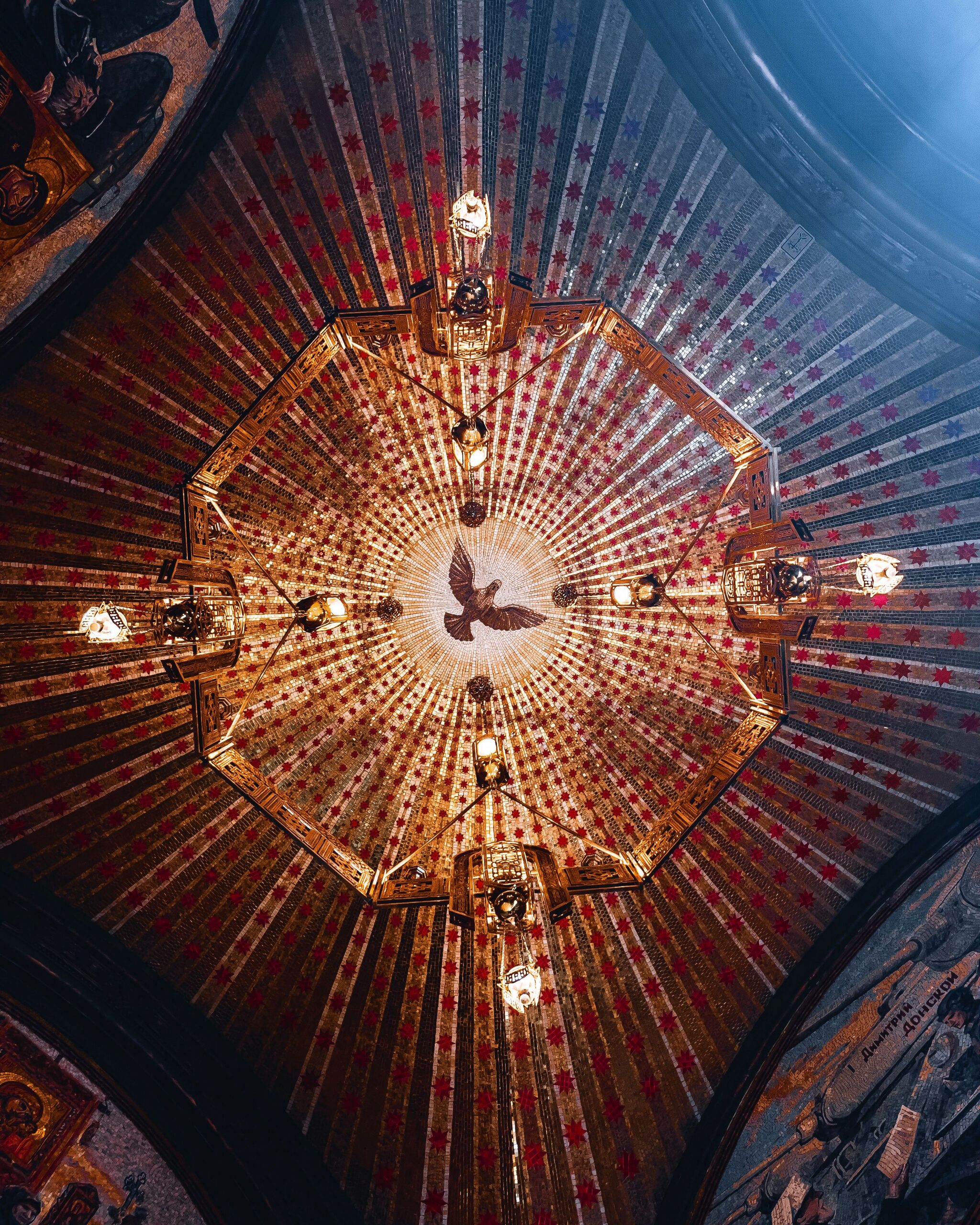
The Holy Spirit is also called the Counselor, the Paraclete, and the Comforter. In the story of creation in Genesis 1:2, the Holy Spirit is revealed with the words And the Spirit of God was moving over the face of the waters. We might say that God the Father is the creating energy of the Trinity, while the Son is the mouthpiece, because outside of a couple of times when God the Father speaks in the New Testament, it is the Son who does the speaking. Of course, before the Incarnation of the Son, the Father did the speaking in the Old Testament. The Spirit is present at the Theophany (baptism of Christ) as a dove.
The Holy Spirit bestows wisdom. So, when someone says or writes something profound, especially about God, it is “Spirit-inspired.” The Prophets of the Old Testament understood and wrote about the profound mysteries of God, not because of their own knowledge but because they were inspired by the Holy Spirit. The Spirit was at work from the time of creation.
The Spirit is mentioned throughout the Old Testament, with several examples coming from the Psalms:
Cast me not away from Thy presence, and take not Thy Holy Spirit from me. Psalm 51:11
When Thou sendest forth Thy Spirit, they are created; and Thou renewest the face of the ground. Psalm 104:30
Teach me to do Thy will, for Thou art my God! Let Thy good spirit lead me on a level path! Psalm 143:10
In John, chapters 13-17, Jesus teaches what are known as the “farewell discourse,” the last teaching before His Passion, which is given to His disciples during the Last Supper. In John 14:26, He promises to send them the Holy Spirit, with the words, “But the Counselor, the Holy Spirit, Whom the Father will send in My name, He will teach you all things, and bring to your remembrance all that I have said to you.” The Holy Spirit is effectively the leader of the Church. The Orthodox Church is grounded on seven sacraments, each of which is affected by the Holy Spirit. We call down the Holy Spirit to consecrate bread and wine into the Body and Blood of Christ. We ask the Holy Spirit to unite a man and a woman into a family. The grace of the Holy Spirit looses and forgives sins in the sacrament of confession.
The Holy Spirit continues to bless, guide and inspire those who lead the church, those who teach, preach and write. I can’t tell you how many times someone commented on something I said that I don’t remember saying, and I feel like these are the moments that the Holy Spirit is speaking through my (very unworthy) ministry. When you feel some infusion of wisdom that brings clarity in a moment of chaos, that is the Holy Spirit working in you.
There is a controversial verse regarding the Holy Spirit, and that is John 15:26: “But when the Counselor comes, whom I shall send to you from the Father, even the Spirit of truth, Who proceeds from the Father, He will bear witness to me.” In the original Nicene Creed, drafted at the First Ecumenical Council in Nicaea in 325 A.D. and edited to its final (current form in the Orthodox Church) form in 381 A.D. at the Second Ecumenical Council in Constantinople, it says: And in the Holy Spirit, the Lord, the Creator of life, Who proceeds from the Father, Who together with the Father and the Son is worshipped and glorified, Who spoke through the prophets. In 589 A.D., in the Third Council of Toledo, the Western Church added the word “Filioque” to the Creed in Latin. In the West (Roman Church) the statement read “And in the Holy Spirit, the, Lord, the Creator of life, Who proceeds from the Father AND the Son.” This was never adopted by the Eastern (Orthodox) Church and in fact was one of the main contributing factors to the Great Schism in 1054 A.D. where the church of the East (Orthodox) and the church of the West (Roman Catholic) excommunicated one another.
The Holy Spirit is equal in divinity with the Father and the Son. The Holy Spirit is uncreated, just like the Father and the Son, and thus in the Creed, He is referred to also as Lord. The Holy Spirit is the Creator of life. When a human being is conceived, it requires male matter, female matter and spiritual matter. The egg and the sperm are fertilized and the Holy Spirit endows this matter with a soul, the spiritual matter, and the soul is present from conception. In Genesis 2:7, we read that in the creation of mankind, the Lord God formed man of dust from the ground, and breathed into his nostrils the breath of life; and man became a living being. Actually, what God put into the man was the spirit of life, He breathed the Holy Spirit into man, and this is what made him a living being. We are created from the moment we are conceived with a soul. A body surrounds and protects that soul throughout life. The soul is stamped with not only the Spirit of God, but with our unique divine imprint, which includes our talents, our personality and our conscience. At the end of life, our bodies cease living and return to the dust from which they were initially created and the spirit, or soul, returns to God, from where it came, for judgment.
Heavenly King, Comforter, Spirit of Truth, present in all places and filling all things, the Treasury of blessings and Giver of life, come and abide in us, cleanse us from every stain, and save our souls, O Good one. (Prayer to the Holy Spirit)
Of the three persons of the Trinity, it seems that we speak the least about the Holy Spirit, and yet it is the Holy Spirit that is most present in our lives and in the life of the Church.