By Fr. Michael Psaromatis
Greek Orthodox Archdiocese of Australia
As the Nativity draws near, the air around us starts to thicken with expectations. You can feel it on the roads and in the car parks: horns, congestion, people hurrying to get everything done, extended shopping hours that promise ease yet somehow multiply the rush. It is easy to move through all of this without noticing what it does to the soul, until you step into a church and the contrast becomes unmistakable. The noise falls away, the pace changes, and something becomes still and luminous, because you have entered a place where reality is interpreted differently. That contrast exposes something important: our problem is not only that we are busy, but that the centre of gravity quietly shifts from the inner life to the external scramble, until we begin to live as though the heart is an afterthought.
Our problem is not only that we are busy, but that the centre of gravity quietly shifts from the inner life to the external scramble, until we begin to live as though the heart is an afterthought.
This year, Christmas arrives to find humanity restless, unsatisfied, and troubled in various ways. It is no exaggeration to say that many people do not feel safe anywhere today, regardless of which country or region they live in. Nor do they feel content, even though our world has never known so many good things, in food, health, education, development and recreation. Science and technology now give us possibilities that earlier generations could hardly imagine, and we can be tempted to live like small gods, controlling, curating, upgrading, and managing everything. Yet a strange poverty remains. We have lost our proper relationship with creation, with our fellow human being, and above all with God. Our world has become one neighbourhood, and yet we often resemble one pitiful group, suffering hardships and causing them, until it becomes difficult to say with any confidence who is more pitiful, the victim or the victimiser.
We are rightly grieved by the sufferings in poorer parts of the world, yet the tragedy does not stop there. Even in countries of abundance and comfort, we can see an alarming rise in anxiety and inner disturbance, so that the border between happiness and sadness appears blurred. Many carry a low level dread that rarely finds words. This is why the contemporary issue of consumerism is not only about spending. It can become an addiction of the heart, a habit of reaching outward for relief, safety, and meaning, only to find that it does not last. Stress rises, the hand reaches, the mind scrolls, the heart is stimulated, the emptiness returns, and the cycle repeats.
In December this pattern becomes more visible. Someone buys and buys, yet feels nothing. A family spends the evening scrolling and shopping with the intention of praying later, then realises it is late and the house is still unsettled. A young person moves restlessly from one sale to the next because constant stimulation has quietly become a way of coping with anxiety or flatness. None of this needs mockery. It needs healing, because it shows what is happening beneath the surface. This is not written to shame anyone. Many of us are tired, carrying burdens that others cannot see, and the Church speaks like this only to heal the heart, not to accuse it.
The Church speaks into this restlessness with an older and deeper realism than any modern commentary. She recognises that a person can be surrounded by good things and still remain unsettled, because the real wound is relational. When our relationship with creation becomes possessive, our relationship with others becomes strained, and our relationship with God becomes distant, then abundance cannot make us content and entertainment cannot make us peaceful. That is precisely why the Nativity is proclaimed as a saving event. It restores the human person from within, reordering the broken links of meaning, love, and communion.
In the Church, a feast is not observed like a secular anniversary. A feast is the remembrance of an event of God’s saving work made present, so the human person can live from it. Christmas is the feast of the Incarnation: the eternal Word of God becomes man within history (John 1:14), assumes our human nature in order to heal it, sanctify it, and lead it into deification. This is why the hymns insist on the word today. The Nativity is not locked in the past. It touches the believer now, in the real shape of daily life, and it invites us to see everything in a different light.
The Nativity is not a seasonal mood. It is the beginning of our rebirth.”
When we chant Christ is born, we are confessing a Birth that changed the history of the world, a Birth that united earth to heaven. We do not say Christ was born as though the mystery is finished and sealed in time. We say He is born, because this Birth continues. The embrace of God opened in Bethlehem through the pure and Ever Virgin Mary has the purpose of sheltering and transfiguring every human person. The Nativity is not a seasonal mood. It is the beginning of our rebirth.
This is also why the Church cannot be reduced to a local club, an organisation, or a cultural shelter. The Incarnation reveals the heart of God, and the heart of God is missionary. God sends. The Father sends the Son from heaven to earth, so that humanity may be led back to heaven. And what the Church does is receive this holy inheritance and continue it. The Apostles felt this first, directly from Christ Himself, and the Church was established and grew through mission, as the Apostles went out into the world to proclaim the Gospel and to show, by their lives, what the Church is and how the Church lives.
In an age of speed, technology, and communication, when we speak easily across continents and our devices travel beyond the limits of our solar system, it is unthinkable that the Church would not reach the smallest and most remote places of the earth. Not to expand influence, but to find the last person and say the joyful news of Christ, and with that news, the possibility that the human soul can rise, can stop living in the tomb of this world, and can live in the Kingdom of Christ. This is why we were created. God placed within us a soul, that part of our being that can commune with Him and live eternally in His grace.
This is not theory for us. We see it, in a very concrete way, in the Orthodox Mission in Fiji, Tonga and Samoa under the Holy Metropolis of New Zealand. The Church does not go there to export a Western lifestyle, or to replace a people’s warmth with our own city tiredness and pressure. The Church goes to guard and deepen what is already there, to show that the source of true joy is Christ the Creator, and that Christ is the rightful receiver of our thanksgiving.
This is also why the practical care offered through mission matters. When the Mission provides food, school supplies, hygiene essentials, medical support, or relief for families under pressure, it is not performing a social program for publicity. These are the means, not the goal. Such help frees people from crushing daily needs so that, unburdened, they can lift heart and soul toward heaven and learn again the life of thanksgiving.
The Scriptures appointed before the Nativity bring this down to earth in the most concrete way. Abraham is presented as the icon of a free heart. By faith he sojourned in the land of promise as in a foreign land (Hebrews 11:9). Faith is the assurance of things hoped for, the conviction of things not seen (Hebrews 11:1). Abraham shows us what consumerism cannot: a person becomes steady when God’s promise becomes more solid than what can be purchased or controlled.
This is why Christ exposes the illusion gently and firmly: one’s life does not consist in the abundance of possessions (Luke 12:15). Where your treasure is, there your heart will be also (Matthew 6:21). The Fathers echo the same truth. They warn that attachment turns blessing into bondage, and they call us back to mercy and generosity.
The Church’s remedy is practical and healing. The Nativity Fast interrupts compulsions and trains the heart back toward gratitude and freedom. Confession brings clarity and light where the heart has become tangled. Worship recentres life on Christ rather than on obligations, moods, or occasions.
Do not let the season be stolen by the tyranny of urgency. Begin in a simple, deliberate way: keep the fast with restraint, let your spending breathe so that mercy and almsgiving come first, and make your return through confession, prayer, and the Divine Liturgy, so that Christmas is received as communion rather than exhaustion. Give your best time to worship, not what is left over, give your best attention to people, not to things, and give your trust to Christ, not to the illusion that more will finally make you safe.
*****
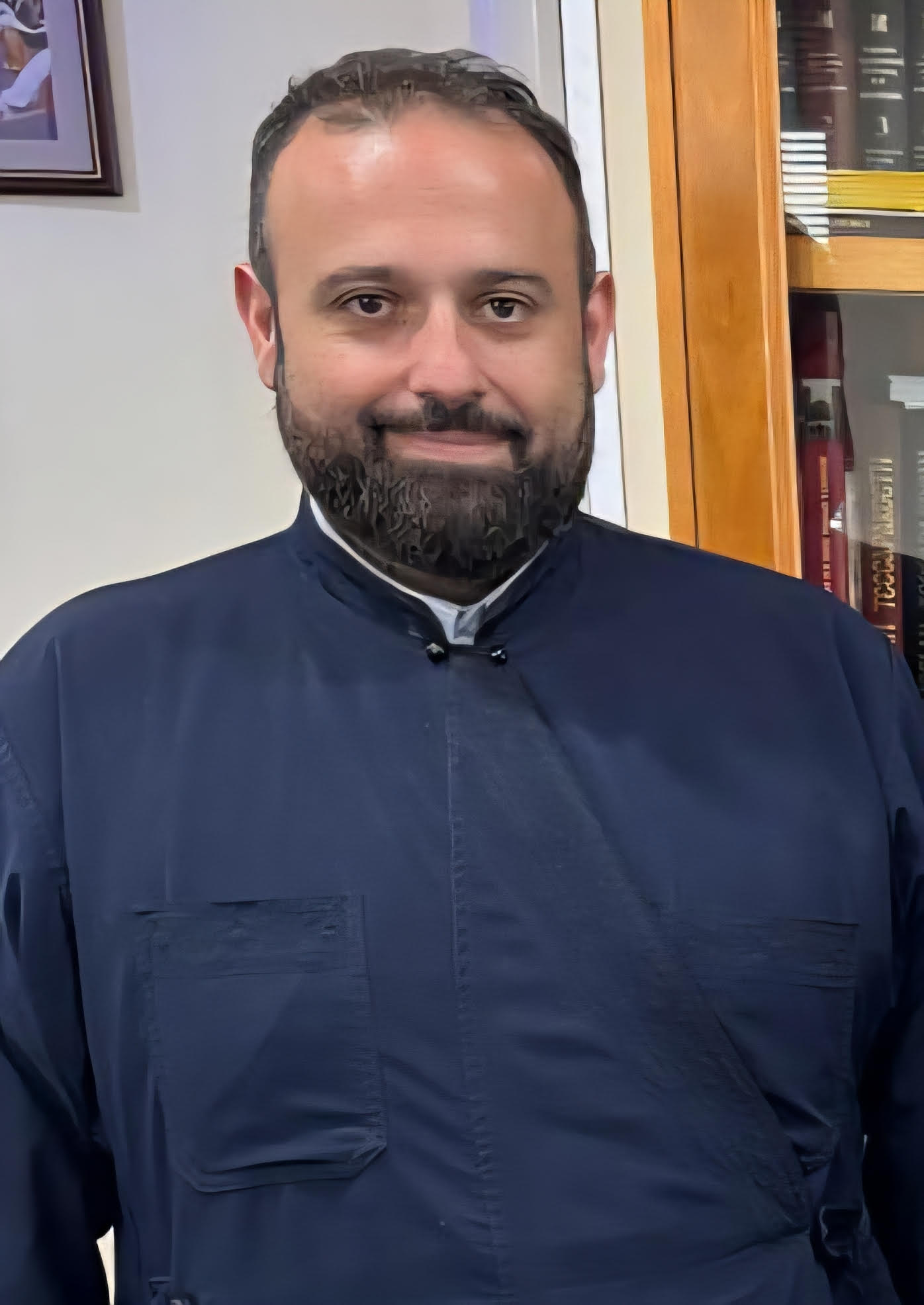 Fr Michael is a priest of the Greek Orthodox Archdiocese of Australia. He has studied Information Technology, Modern Greek, and Theology at Flinders University. With a deep love for music, theology, and arts Fr Michael brings a dynamism to his ministry.
His 13 year ministry has included service in aged care, the youth, regional communities, and meeting the needs of busy Parishes with Presvytera Stavroula.
Fr Michael is also actively involved in Orthodox missionary outreach in the Pacific, particularly in Fiji. He has spent time in the region serving liturgy, engaging with local communities, and working towards the development of the mission.
He is currently serving at the Parish of St Dimitrios, Salisbury, in South Australia.


0 Comments