By Fr. Michael Psaromatis
Greek Orthodox Archdiocese of Australia
In parish life, many of the questions I hear come from people who care deeply. They want to honour God. They want to approach Holy Communion with reverence. They want to live as Orthodox Christians.
So the questions come quickly, often with a quiet nervousness beneath them.
Do I have to fast from midnight, or from the night before? What if I took medication or vitamins this morning? What if I am unwell, or pregnant? If I argued with my spouse last night, can I still receive? If I missed the prayers of preparation, should I stay back? If I arrived late to the Divine Liturgy, am I allowed to commune?
Do I need confession every time before Communion? How often should I confess if I do not feel I have fallen into big sins? What if I am embarrassed to confess something? Is confession to the priest, or to God? If I confessed and I fall again, what is the point? Is it acceptable to confess at a monastery instead of my parish?
Are alternate oils permitted in lieu of olive oil? What about seafood? What about eggs hidden in baking? What about when there’s a wedding, name day, travel, shift work? If I break the fast accidentally, have I ruined everything? Is it still fasting if I am eating correctly while living without prayer, without gentleness, without mercy?
What is acceptable to wear to church? Are women allowed to wear pants? What about makeup, jewellery, or false nails? Can men wear shorts in summer? Can I come forward for Communion if I am not married in the Church? Can I enter the church if I am on my period? Can I venerate icons if I am not fasting? Is it a sin if I do not cross myself at every moment?
How many prayers do I have to say every day? If I missed my prayers, should I start again tomorrow? Is the Jesus Prayer enough? Do I need to read all the canons before Communion?
These are often the questions of the second, and subsequent, generation Orthodox Christians, particularly within Greek communities, who have inherited a strong instinct that Orthodoxy matters. Yet the questions reveal something deeper. For many, faith is understood first as adherence to rules, rather than as a living relationship with God within the life of the Church.
The Christian life does not fit inside a spreadsheet, because love cannot be reduced to a checklist.
Rules do matter. The Church has always had discipline, order, boundaries, and guidance. Yet one sentence needs to be said clearly and often.
We worship the living God, rather than the rules.
Rules protect the sacred, but they are not the centre. Christ is.
When the first questions are along the lines of “What am I allowed to do?” the heart shifts from communion to compliance. It is an attempt to manage anxiety by turning the spiritual life into simple yes/no steps. If it can be calculated, it feels safe. If it can be directed, fear quietens. Yet the Christian life does not fit inside a spreadsheet, because love cannot be reduced to a checklist.
A great deal of confusion comes from a ‘Western’ assumption about religion. In many Western frameworks, faith is understood mainly in legal terms: obligations, transgressions, penalties, clearance. That instinct is old. You can see it in the Pharisee of Christ’s parable who lists fasting and righteousness as proof of worthiness, while the publican simply begs for mercy (Luke 18:9–14). The issue is never fasting itself. The issue is what fasting becomes when it is used to justify the self.
Legalism appears when spiritual security is tied mainly to external requirements. The spiritual life becomes performance, pass or fail. It can grow from good intentions and reverence, yet it still twists worship and twists the image of God.
In minority communities, keeping the faith often meant keeping the externals, because the externals were what could be seen even when language was changing, when the next generation was integrating in a new country, when the world felt threatening.
Christ confronts this distortion repeatedly. He rebukes those who honour God with the lips while the heart remains far away (Matthew 15:8–9). He exposes the habit of trading mercy for technicalities (Matthew 23:23). He repeats the prophetic word, “I desire mercy and not sacrifice” (Matthew 9:13; Matthew 12:7; Hosea 6:6). Strictness detached from love becomes its own kind of blindness.
You see the same thing in the debates about the Sabbath. The Sabbath was holy and commanded by God, yet Christ heals on the Sabbath and the healing reveals the heart of God. “The Sabbath was made for man, and not man for the Sabbath” (Mark 2:27). The rule exists for life. The commandment serves restoration. When a rule begins to crush rather than mend, something has been misunderstood.
This is also cultural. Many Greek Orthodox families preserved the faith heroically in immigrant settings. Tradition became a lifeline. Customs became identity markers. In minority communities, keeping the faith often meant keeping the externals, because the externals were what could be seen even when language was changing, when the next generation was integrating in a new country, when the world felt threatening. Add to this the way modern societies define religion as rules, morals, and private belief, and a skewed inheritance forms almost naturally. Orthodoxy can be received as culture and etiquette rather than as living medicine, communion, repentance, and transfiguration.
In diaspora settings it helps to remember plainly: Orthodoxy is deeper than ethnicity. It is Christ’s life offered to His people.
This is where the pillars of the spiritual life need to be understood properly, as medicine.
Prayer, fasting, and almsgiving are pillars Christ assumes as normal Christian life: when you give, when you pray, when you fast (Matthew 6:1–18). These practices help prioritise God over material comfort, psychological impulse, and emotional reactivity. They train the heart. They restore inner order.
Fasting is an ascetical tool that helps the heart remember God and resist the tyranny of appetite. The prophets already taught that fasting without mercy collapses into empty form. Isaiah describes the fast God chooses: loosening bonds of wickedness, sharing bread with the hungry, caring for the afflicted (Isaiah 58).
Here is the difference between legalism and Orthodoxy, in plain language. A legalistic approach to fasting says, I did the correct diet, therefore I qualify. The Orthodox approach says, I am learning hunger so that my heart can become humble, watchful, and merciful. One turns fasting into a badge. The other turns fasting into therapy. One makes it a transaction. The other makes it a transformation.
Almsgiving breaks the illusion of self sufficiency. It makes the neighbour visible again. Scripture is blunt. “If anyone has the world’s goods and sees his brother in need, yet closes his heart against him, how does the love of God abide in him?” (1 John 3:17). James calls faith without works dead (James 2:17). Christ places love for the hungry, the stranger, the sick, the prisoner at the centre of judgement (Matthew 25:31–46). Mercy is not an ornament. Mercy is part of salvation’s shape.
Prayer gathers the scattered mind. It restores communion. Christ teaches prayer as filial trust, “Our Father” (Matthew 6:9). He warns against prayer as theatre, words without heart (Matthew 6:5–8). Prayer becomes breath when it becomes relationship.
Alongside these stand repentance, humility, and obedience. Repentance is turning, a change of mind, a movement back toward life. Scripture calls this godly sorrow, “a repentance that leads to salvation” (2 Corinthians 7:10). Humility is truthfulness, like the publican who goes home justified (Luke 18:14). Obedience in Orthodoxy is trustful responsiveness within relationship, like Christ Himself who “became obedient unto death” (Philippians 2:8). These presuppose love. Love gives them life.
One simple distinction helps people breathe. There is a difference between the commandments of God and the canons of the Church.
The commandments are divine, unchanging, universal. Love God and love your neighbour (Matthew 22:37–40). Forgive (Matthew 6:14–15). Be merciful (Luke 6:36). These flow from what human life is meant to be.
This is where two Greek words help us understand the Church’s mind. The Church holds the ideal with firmness, akrivia, and she applies it with mercy, oikonomia. Both serve the same aim: healing and communion. Economy is God’s merciful dispensation, the application of truth in a way that actually restores the person. Economy does not erase the ideal. It applies the Church’s life wisely so the person can breathe, repent, and grow.
That is why the Church insists on the importance of a spiritual father.
A spiritual father is more than someone who hears confession. He is called to take the general therapeutic life of the Church, prayer, fasting, repentance, preparation for Communion, and help apply it to the actual person standing in front of him, with their concrete strengths and weaknesses, their wounds and temptations, their physical condition, their psychological burden, their emotional capacity, their family situation, their level of spiritual maturity.
The spiritual father learns the person over time. He discerns patterns, not only behaviours. He sees where shame disguises itself as repentance and where fear disguises itself as piety. He helps a person choose disciplines that are sustainable and healing. Often he begins small: one steady prayer rule that can actually be kept, one gentle fasting practice that does not fuel anxiety, one concrete act of mercy that breaks self absorption. As the person grows, the prescription changes. Treatment is adjusted. The aim stays the same: communion, repentance, wholeness.
Just as a doctor follows medical guidelines yet tailors medication and dosage to the actual patient, a spiritual father remains faithful to the Church’s common rule and can tailor ascetical remedies according to the person’s needs. The goal is therapy.
A rigid one size approach produces despair in that moment. It turns the Christian life into burden. It presents God as displeased by weakness.
You see this in real life. Consider a young Orthodox mother who has just had a baby and is nursing. Exhaustion has become her daily atmosphere. Her body is giving constantly. Sleep is broken. Emotions are fragile. Some days she manages only a short prayer and a breath of gratitude.
Then Lent arrives, or a fasting season before a feast. She begins to panic. She has heard the rules spoken about as absolutes, so she assumes she must keep the fast in its strictest form. She worries that if she eats something non fasting to keep her strength, she is failing God. She feels guilty for needing nourishment. Then the deeper anxiety arrives. If I cannot fast properly, am I allowed to receive Holy Communion. If I cannot keep the rule, should I stay back.
She is trying to be faithful while carrying a hidden weight.
A rigid one size approach produces despair in that moment. It turns the Christian life into burden. It presents God as displeased by weakness. Yet Scripture reveals a different God: the One who receives the weary and heavy laden (Matthew 11:28), the One who does not break the bruised reed (Matthew 12:20; Isaiah 42:3).
This is where the spiritual father becomes a gift. A spiritual father formed by the Church’s common rhythm may bless that mother to modify her fasting. Not to excuse sin, but to preserve strength, peace, prayer, and love. He may help her see that her season of asceticism is measured through patience, gentleness, thanksgiving, and a quiet turning of the heart to Christ amid sleepless nights. He may guide her toward mercy in the home, kindness toward her husband, gratitude rather than resentment, forgiveness rather than sharpness. He may remind her that God is honoured by repentance and love, and that despair is a heavy yoke. He may bring to mind the apostolic warning that the letter kills while the Spirit gives life (2 Corinthians 3:6), a warning against lifeless rule keeping that produces fear rather than healing.
There is another pastoral issue worth naming: scrupulosity. Many people think they are being pious when fear has simply put on religious clothing. Scrupulosity produces paralysis. It fixates on exactness without producing peace. Repentance looks different. Repentance is hope returning to the Father. It is the prodigal coming home (Luke 15). It is the cry of the Psalm, “A broken and contrite heart, O God, You will not despise” (Psalm 50:17 in Orthodox numbering). It is grief that softens rather than hardens.
That is why ascetical disciplines must be understood as remedial processes. Fasting, prayer, confession, preparation: these are therapies, remedies, medicines.
And then there is confession, so often treated like a requirement rather than a gift.
Confession comes straight from the Gospel. After the Resurrection, Christ breathes on His disciples and says, “Receive the Holy Spirit. If you forgive the sins of any, they are forgiven; if you retain the sins of any, they are retained” (John 20:22–23). Christ also speaks of binding and loosing (Matthew 18:18), pastoral authority exercised for the healing of souls. The apostolic writings link confession and healing directly: “Confess your sins to one another, and pray for one another, that you may be healed” (James 5:16).
In the early centuries, repentance sometimes had a more public dimension. Certain sins could be confessed openly, with a public process of repentance. Over time, the Church learned through experience that in many settings public confession produced scandal, gossip, judgement, and harm. People became fixated on the sins of others. A medicine that should have healed began, in some cases, to injure.
So the Church, in her pastoral discernment, established the practice most of us know: confession offered privately, with a priest confessor, in discretion, prayer, and healing. The aim remained the same: repentance, restoration, communion. The method served the aim.
This is also why asking, “Do I have to confess before every Communion?” often misses the deeper question. The deeper question is, “How do I live repentance in a steady, honest, healing way?” The answer grows within trust, within the life of the Church, with a spiritual father who knows the person.
Holy Communion is where keeping the rules often causes the most spiritual damage. Some approach the chalice with anxious calculation. Others stay away for long periods out of confusion. Yet the Eucharist is medicine for those who seek healing. St Paul warns us to approach with discernment (1 Corinthians 11:27–31), a call to seriousness and repentance.
Even questions about dress, posture, or etiquette can be handled in a way that either restores or harms. Modesty and reverence matter. The body participates in worship. Yet the deeper question is reverence of heart. Christ warns against focusing on externals while neglecting the weightier matters of mercy and faith (Matthew 23:23).
Legalism also damages parish life through judgement. Rules without love become tools for policing others. People watch one another. Christ’s warning is clear: “Judge not, that you be not judged” (Matthew 7:1). The call is attention to the beam in our own eye before the speck in another (Matthew 7:3–5).
People need something clear here, without turning the spiritual life into a technical manual. Keep the Church’s common rhythm as best you can. Pray daily, even simply. Fast according to your measure and with guidance. Confess regularly, as therapy. Reconcile quickly when relationships fracture. Christ says to seek reconciliation as part of worship (Matthew 5:23–24). Give alms quietly. Approach the chalice with repentance and peace.
The goal is not to become a perfect rule keeper. The goal is to become a human being made whole in Christ.
So the shift becomes simple, and it can guide an entire Orthodox life. Let the questions become:
What will heal me?
What will help me love?
How do I return?
Rules matter. They protect. They guide. They form. Yet Christ remains the centre.
So let us stop treating the spiritual life like a compliance test. Orthodoxy is a way of healing, a life of communion, a path of restoration. The disciplines of the Church exist to reorient the whole person toward Christ.
If the first instinct is to ask, “Am I allowed?” pause and ask a better question. What will help me love God and love my neighbour. What will soften my heart. What will help me return.
Find a spiritual father. Stay close to the life of the Church. Speak honestly. Keep the common rule faithfully, and receive economy with gratitude when weakness requires it, so that repentance becomes possible and healing becomes real. Hold the ideal with reverence, and refuse the fear that equates holiness with anxiety.
Because the goal is not to become a perfect rule keeper. The goal is to become a human being made whole in Christ. The Church gives disciplines to save us, to restore the image, to soften what has hardened, to gather what has been scattered. This is why the Church is a hospital, and why Christ remains the Physician.
And when the heart learns that, fasting becomes freedom, confession becomes relief, prayer becomes breath, and Holy Communion becomes what it has always been: the fire of divine love given for the life of the world.
*****
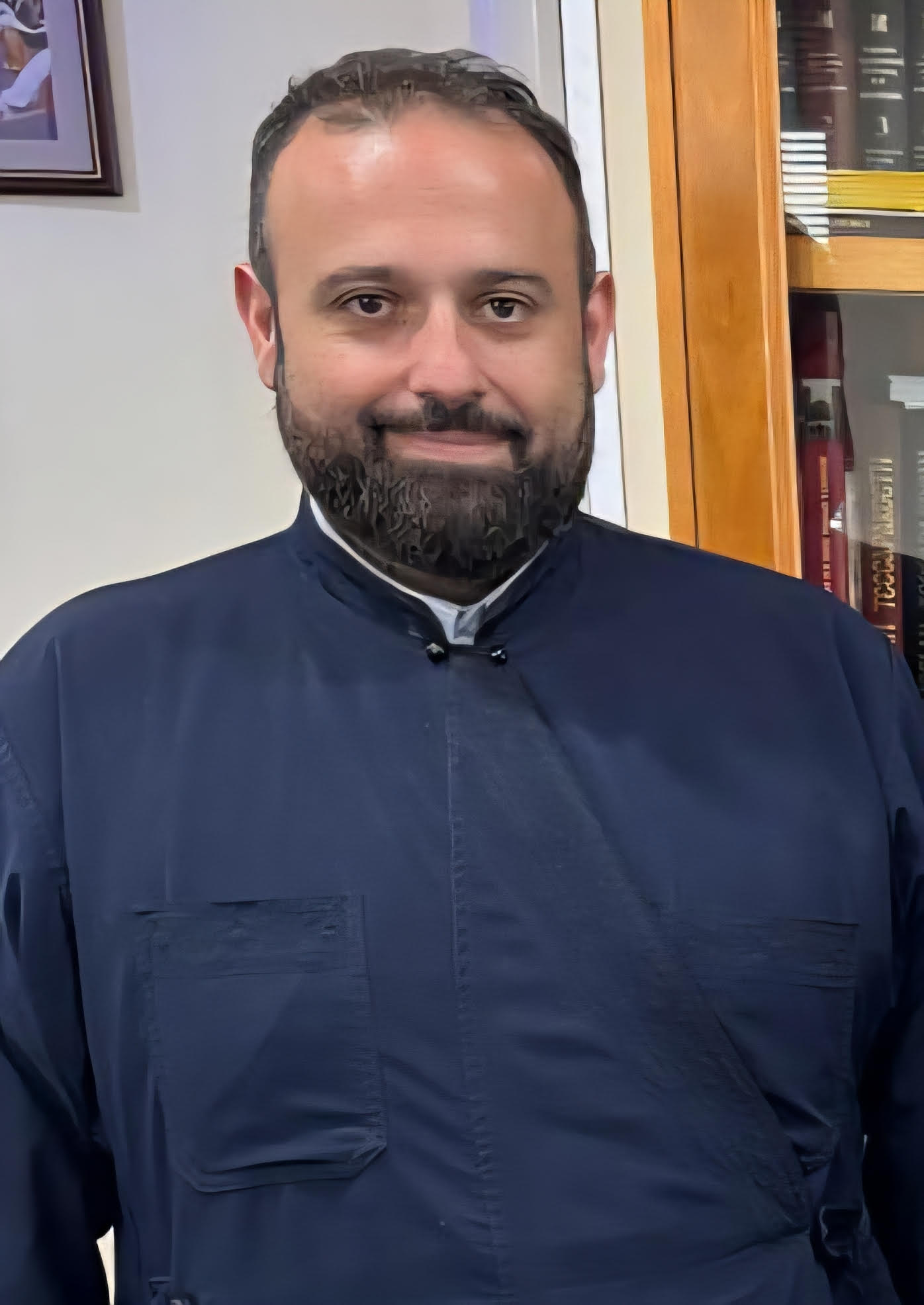 Fr Michael is a priest of the Greek Orthodox Archdiocese of Australia. He has studied Information Technology, Modern Greek, and Theology at Flinders University. With a deep love for music, theology, and arts Fr Michael brings a dynamism to his ministry.
His 13 year ministry has included service in aged care, the youth, regional communities, and meeting the needs of busy Parishes with Presvytera Stavroula.
Fr Michael is also actively involved in Orthodox missionary outreach in the Pacific, particularly in Fiji. He has spent time in the region serving liturgy, engaging with local communities, and working towards the development of the mission.
He is currently serving at the Parish of St Dimitrios, Salisbury, in South Australia.



0 Comments