

Blessed are you when men revile you and persecute you and utter all kinds of evil against you falsely on My account. Rejoice and be glad, for your reward is great in heaven, for so men persecuted the prophets before you.
Matthew 5:11-12
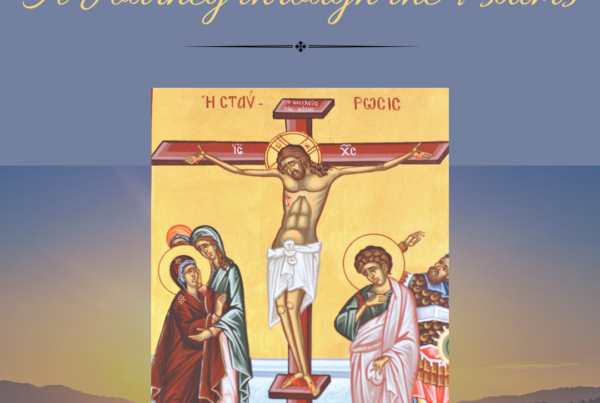
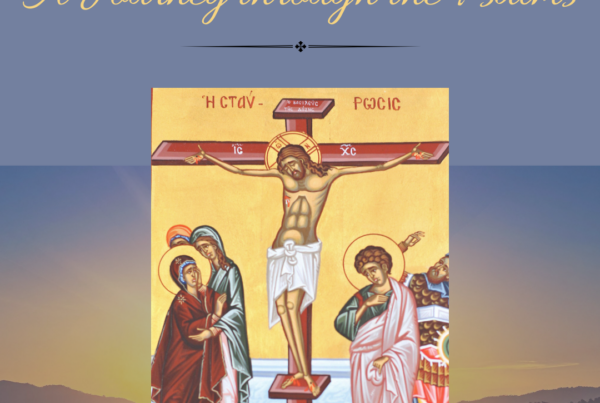
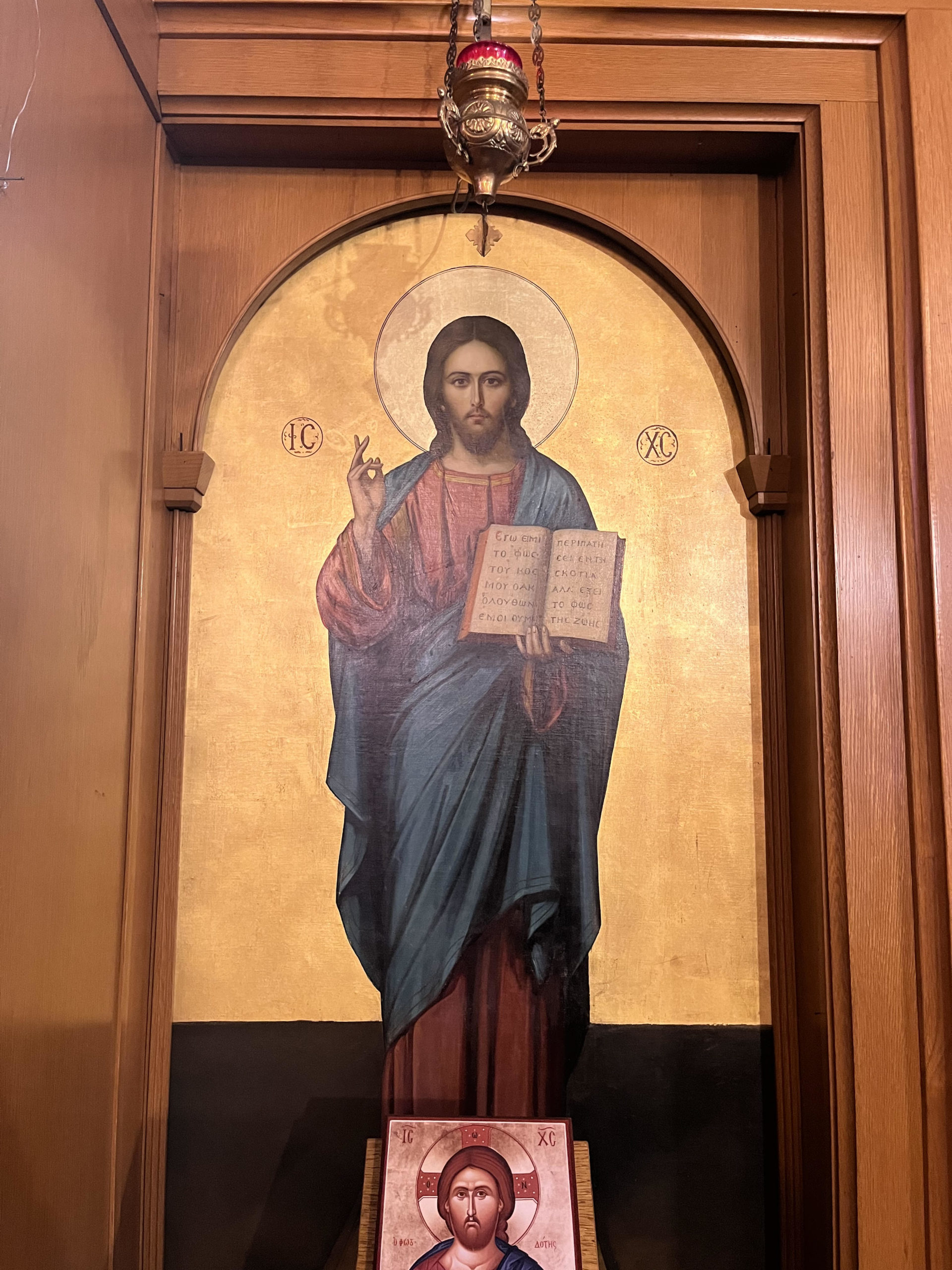
Today we conclude the writings on the Beatitudes with the final one. The goal of Christ in giving us the Beatitudes is to help us transform into an icon, an image of Him. If you look at the icons in any church or any home, you will see images of holy people who seem peaceful, joyful and confident. If you look at their physical features, you will see features that are distorted—small mouths, big ears, big eyes, big hands, and small heads. This is not because the iconographer did not know how to paint. Rather it is to show us that the way to sainthood is a mouth that speaks little and speaks carefully; ears that are open to hear the cries of our fellow man; eyes that are open to the beauty of God’s creation, hands that are ready to do His work; and small egos (heads) that reflect humility.
Then look at us in modern times—we look stressed, sad, and insecure, rather than peaceful, joyful and confident. We have big mouths, are not good listeners, we keep our eyes on personal prizes and use our hands primarily for personal gain. We don’t know the meaning of humility because we live in a society that promotes “It’s all about me” as an appropriate attitude.
Society has long been glorifying violence instead of peace, material gain rather than charity, for many years, and sometimes it seems with each passing year we move further and further away from the way Jesus taught us to live. As for the one who promotes peace and charity, he or she is reviled rather than rewarded many a time. The Lord tells us not to worry. Rejoice when ridiculed for staying faithful and doing what is righteous in the eyes of God. Rejoice and be glad, for the reward will be great in heaven.
The early church was so attractive that even though it was constantly under persecution from the government and culture, the church grew at an exponential rate—about 40 percent per decade in the early centuries of Christianity, all while under tremendous persecution, often with threat of death for anyone that was caught. People saw the faith of the early Christians and thought, “if this is a faith that they are willing to die for, it must really be something worthy.” The history of the Church is anchored on willingness to die for God—there are many examples of martyrdom in the Bible and early church history—St. Stephen, St. Paul, the Apostles. Persecutions continue today for Christians in many parts of the world, especially Asia, Indonesia, Africa, Iran, Iraq and other countries. While we don’t live under threat of death in America for our Christianity, other, more subtle things are being done to make being a Christian more difficult. Sports being scheduled on Sunday mornings is one such example. A child who plays on such a team will be punished or excluded if they choose worship over sports.
“Rejoice and be glad” is a common phrase from the Psalms that the audience would have known. Jesus concludes this last Beatitude about steadfastness under persecution by telling His followers to rejoice because the reward for their faith will be great in heaven. The word “misthos” (meaning reward or payment) is used many times in the New Testament.
The main symbol of Christians is not the empty tomb or the star of Bethlehem. It is the cross. What was once a symbol of shame, humiliation and death has become a symbol of joy, hope and life.
I read in an inspirational book recently that our lifespan, when compared to eternity, is ONE grain of sand on the beach. We become so disappointed when things don’t go our way, feeling that we are falling behind everyone else. That’s because, sadly, most people see the end of life as something to fear, and life is all about getting what we can get, getting as much as you possibly can before life is over. But the true Christian believes that life is a preparation for eternal life and death is the passage from life on earth to life in God’s kingdom. And so, setbacks in life, when seen against eternity, can hardly be considered things over which to be sad. After all, life IS temporary. And while we think as a society that everything seems permanent, the only permanent thing we can possibly have is the faith that sustains us through this life in preparation for eternal life.
One sign of strong faith is the ability to rejoice and be glad regardless of circumstances. Our joy is not in material gain, and material or other setbacks should ultimately not keep us from joy. Our joy is in the Lord, and our hope is in the destination, the Kingdom of heaven.
Blessed is he whose transgression is forgiven, whose sin is covered. Blessed is the man to whom the Lord imputes no iniquity, and in whose spirit there is no deceit. When I declared not my sin, my body wasted away though my groaning all day long. For day and night Thy hand was heavy upon me; my strength was dried up as by the heat of summer. I acknowledged my sin to Thee, and I did not hide my iniquity; I said, “I will confess my transgressions to the Lord”; then Thou didst forgive the guilt of my sin. Therefore let everyone who is godly offer prayer to Thee; at a time of distress, in the rush of great waters, they shall not reach him. Thou art a hiding place for me, Thou preservest me from trouble; Thou dost encompass me with deliverance. I will instruct you and teach you the way you should go; I will counsel you with my eye upon you. Be not like a horse or a mule, without understanding, which must be curbed with bit and bridle, else it will not keep with you. May are the pangs of the wicked; but steadfast love surrounds him who trusts in the Lord. Be glad in the Lord, and rejoice, O righteous, and shout for joy, all you upright in the Lord! Psalm 32
Point to ponder: Do you love and pray for those who persecute you? Do you hide your faith from others? How so?