


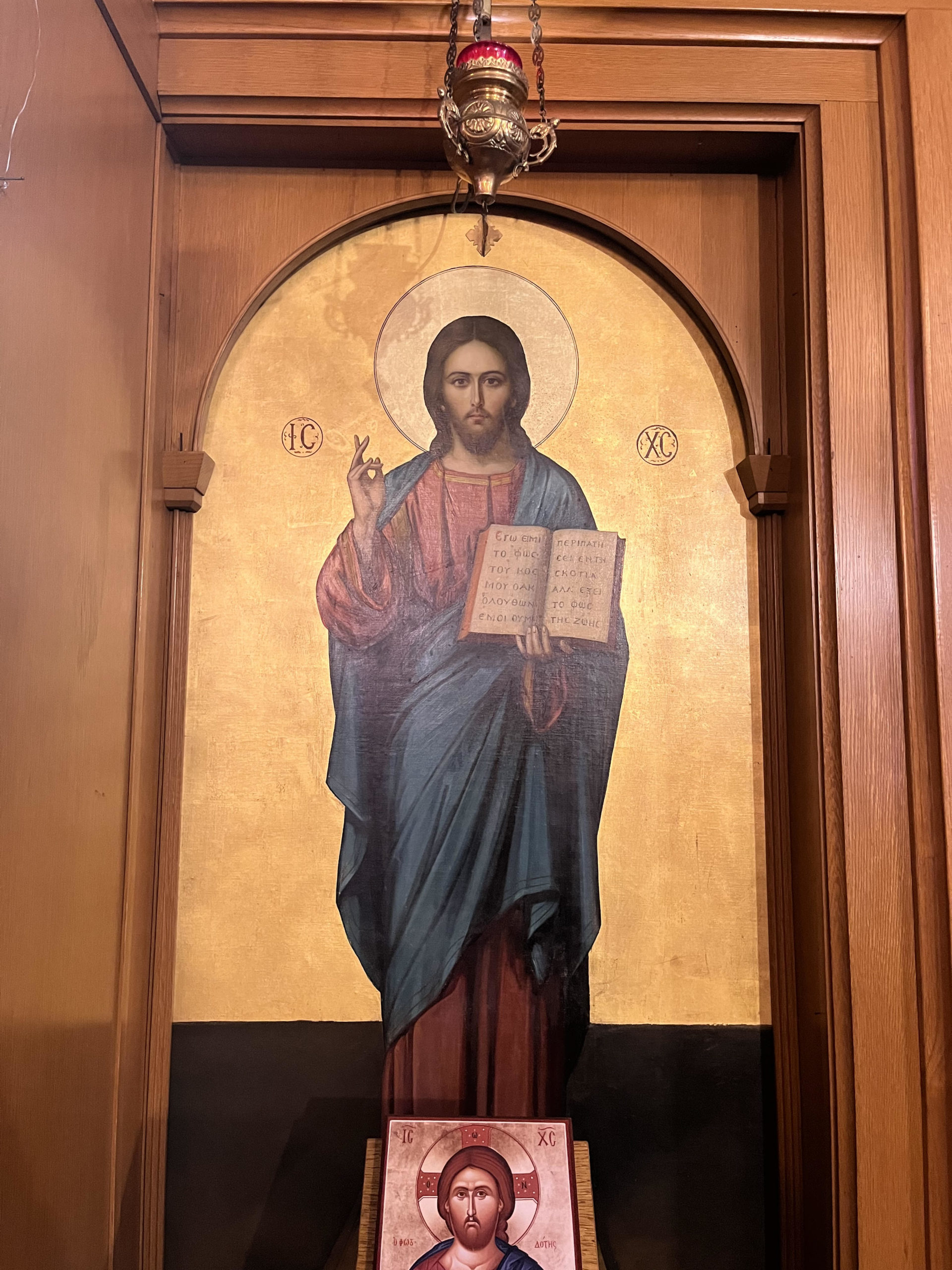
And He went about all Galilee, teaching in their synagogues and preaching the Gospel of the Kingdom and healing every disease and every infirmity among the people. So His fame spread throughout all Syria, and they brought Him all the sick, those afflicted with various diseases and pains, demoniacs, epileptics and paralytics, and He healed them. And great crowds follow Him from Galilee and the Decapolis and Jerusalem and Judea and from beyond the Jordan.
Matthew 4: 23-25
The greatest sermon ever preached is known as the Sermon on the Mount, given by Jesus Christ in the Gospel of Matthew, chapters 5-7. We will be focusing on this sermon, which includes well-known passages like the Beatitudes and the Lord’s Prayer, as well as lesser-known passage. Taken in total, this sermon teaches us not only what we believe about God, but how to pray and more importantly, how to live a Christ-centered life.
The scene is set by the things that happen in Matthew chapters three and four. Jesus came into the world in relative anonymity. Born in a cave, revealed to shepherds and Magi, and exiled for a period of time to Egypt, Jesus grows up in Nazareth, the Son of a simple carpenter, who takes on the same trade as well. He participates in temple worship. No one outside of his family—Mary, Joseph, His cousin John (the Baptist)—knows that He is the promised Messiah.
In Matthew 3, John the Baptist preaches about the arrival of the long-promised Messiah. Hundreds of years before, prophets have reassured God’s people that a Messiah, a deliverer is coming. And then suddenly, about 350 years before the time of Christ, the voice of the prophets goes silent. People wait for generations, wondering at age thirty, He is baptized by John in the Jordan River. He is revealed as the Son of God, as the voice of God is heard endorsing Jesus as “My Beloved Son, with Whom I am well pleased.” (Matthew 3:17) Following the baptism, Jesus is led into the wilderness and tempted by the devil during a forty-day period of prayer and fasting and solitary preparation for the ministry that is to come.
Jesus begins His ministry in Galilee, significant because Galilee is primarily Gentile territory. Jesus will establish immediately that His ministry is for the salvation of ALL people, not just the Jews, God’s chosen people from the time of Abraham.
Jesus chooses several men to be His disciples. In Matthew 4, four disciples are called—Peter and Andrew, James and John. Two sets of brothers. During Jesus’ day, there was a well-established tradition of Rabbis (teachers) and disciples (students). Some rabbis would call people to be their disciples. Other people would come and ask a rabbi if they could be his disciples/students. Peter, Andrew, James and John would have understood the meaning of all of these concepts. They were undoubtedly surprised when Jesus called them. They weren’t leaders in the temple, accomplished students of another rabbi. They were fishermen laboring in obscurity. When called by Jesus, they left everything and followed—most likely some were eager and most likely others were reluctant. Through the choice of the disciples, Jesus begins to build an infrastructure around Him so that He can begin His ministry.
The ministry of Christ sets a foundational tone for what the church does today. Jesus teaches, preaches and heals. This is what the church does for us today—it is a place where we are taught (Bible study, catechism, Sunday school), where we hear sermons (worship) and where we find healing (pastoral care, confession).
In Jesus’ ministry, He teaches in the synagogues where He has standing. He has been in the synagogue His entire life and now He moves into a more authoritative role. The “preaching of the Gospel of the Kingdom” is new and will raise controversy. “Kingdom” is a political word and will confuse some people, inspire others and anger others. Jesus is not speaking about an earthly kingdom, or an overthrow of the Romans. He is speaking of a heavenly Kingdom, the Kingdom of heaven coming to earth in present time in His person, although He will not be that bold in revealing Himself. Instead, He will teach about how to live in the Kingdom—how to pray, how to act, how to think and what to believe.
The other new nuance to Jesus’ ministry is healing. At the time, many people felt that anything that would befall someone, just as illness or infirmity, was a sign that they did not have the favor of God, oftentimes because of their sinfulness. Jesus begins to heal the diseases and infirmities of the people, something that had never been done before that time.
Jesus inspired several kinds of followers. There is the core group that will be number twelve. A second group of seventy will also be called. There are loyal but less committed followers. There are curiosity seekers. And there are detractors, who are Jewish, Gentile and Romans. As His fame (or infamy) spreads throughout Syria, more and more people are bringing more and more sick people and we read in the Gospels that Jesus healed them. We don’t read of any circumstance where someone cries out “Lord,” asking for help, and is rebuffed (except for the Canaanite Woman whose daughter was healed after Christ tested her faith).
Blessed is he who considers the poor! The Lord delivers him in the day of trouble; the Lord protects him and keeps him alive; he is called blessed in the land; Thou dost not give him up to the will of his enemies. The Lord sustains him on his sickbed; in his illness Thou healest all his infirmities. As for me, I said, “Lord, be gracious to me; heal me, for I have sinned against Three!” My enemies say of me in malice: “When will he die, and his name perish?” And when one comes to see me, he utters empty words, while his heart gathers mischief; when he goes out, he tells is abroad. All who hate me whisper together about me; they imagine the worse for me. They say, “A deadly thing has fastened upon him; he will not rise again from where he lies.” Even my bosom friend in whom I trusted, who ate of my bread, has lifted his heel against me. Bot do Thou, O Lord, be gracious to me, and raise me up, that I may requite them! By this I know that Thou art pleased with me, in that my enemy has not triumphed over me. But Thou hast upheld me because of my integrity, and set me in Thy presence forever. Blessed be the Lord, the God of Israel, from everlasting to everlasting! Amen and Amen. Psalm 41
Miracles are adding up, more and more people are following from all over the area, and the stage is now set. Jesus gathers the crowds and prepares to deliver the greatest sermon every preached: The Sermon on the Mount.