“Think now that I have come to abolish the law and the prophets; I have come not to abolish them but to fulfill them. For truly, I say to you, till heaven and earth pass away, not an iota, not a dot, will pass from the law until all is accomplished. Whoever then relaxes one of the least of these commandments and teaches men so, shall be called least in the kingdom of heaven; but he who does them and teaches them shall be called great in the kingdom of heaven. For I tell you, unless your righteousness exceeds that of the scribes and Pharisees, you will never enter the kingdom of heaven.”
Matthew 5:17-20
The Sermon on the Mount in many respects turned Judaism on its head. Up to this point, the sermon focused on the Beatitudes, prescriptions for how to live a God-centered life. While these phrases were new, in the sense that they had never been heard before, they were not things where there would be a lot of objection because none of them contradicted the Law or the prophets. The words that would follow would change some of the Old Testament understanding of love, order, forgiveness and other things. They would create controversy.
While many people saw Jesus as a revolutionary, who came to overthrow the Roman establishment and the Jewish leadership, Jesus was a proponent of following both the Mosaic and Roman Laws. In the instance of the Roman law, concerning paying taxes, Jesus said “Render therefore to Caesar the things that are Caesar’s, and to God the things that are God’s.” (Matthew 22:21) Regarding the Mosaic Law, Jesus was circumcised on the eighth day after the Nativity. (Luke 2:21) He was presented in the temple on His fortieth day, with Mary and Joseph bringing in the appropriate sacrifice. (Luke 2:22-27) He also went up yearly to Jerusalem for the Passover. (Luke 2:41-52)
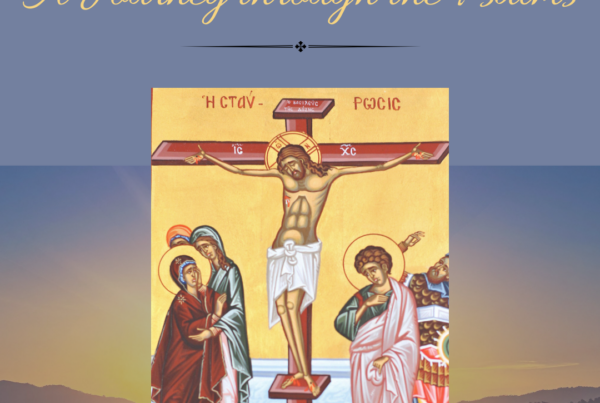
The Mosaic Law was not only foundational for the Jewish religion, but would be foundation for Christian practice. For instance, the Law provided for the construction and furnishing in the temple. The modern Orthodox Church has elements from the Jewish temple to this day—such as the icon screen separating the sanctuary from the Holy of Holies (the altar). The concept of a wall of separation in in the temple is Jewish. Now our wall of separation has icons on it. Jesus begins this passage by saying He did not come to abolish the law, but to fulfill the law and in some instances, to supersede the law. Similarly, in Orthodoxy specifically, we have built upon a foundation based on Mosaic Law but have superseded that Law on many levels.
Jesus was quick to teach people that they need to stay true to the commandments. There has probably been a tendency since the time of Moses to skirt around the commandments, or to manipulate in a way that is beneficial to a subgroup of people, or even to an individual. Jesus warns against relaxing the commandments. He says that the one who would not only relax the commandments, but even worse, to teach others it is okay to do so, would be called least in the Kingdom of Heaven. However, the one who not only keeps the commandments but teaches other people to do so will be seen as great in the Kingdom of Heaven.
The warning of Jesus to not relax still applies today. There are specific teachings in the Gospels that have been codified into the Traditions and Canon Law of the Orthodox Church, and there is always a temptation to relax certain things. There are two applications of Orthodox Tradition and practice—Akrevia (or strictness, or letter of the law) and economia (dispensation, or spirit of the law). Where we land between these two poles should be based on diakrisis (or discernment). In ecclesiastical matters, the diakrisis generally is the purview of the clergy. But in making decisions for ourselves and as we contemplate what we will follow strictly and what we may not, we need to pray for our own sense of discernment. We must acknowledge that Christ warned about relaxing the Law too much because they just leads to chaos and disorder.
Jesus finishes His teachings in this section on the Law and the Prophets by telling His followers, “For I tell you, unless your righteousness exceeds that of the scribes and Pharisees, you will never enter the Kingdom of Heaven.” (Matthew 5:20) The scribes and the Pharisees were worshipping righteousness, or what they perceived as righteousness, and in many instances, were not worshipping God. And for people who were educated in the Law and the prophets, they failed to recognize the hundreds of Messianic signs being fulfilled in the person of Jesus Christ. That doesn’t mean that righteousness is inherently evil. But if the end goal is righteousness but no connection to faith or God, then righteousness but be misplaced. Righteousness in order to get along with other people eventually become narcissism, because those who are being “righteous” are the beneficiaries of their own righteousness. The inspiration for the followers was not abolish the concept of righteousness but to add faith to it. In this way, the followers of Jesus would have righteousness, but it would be superseded by faith, works and grace.
Blessed is the man who walks not in the counsel of the wicked, not stands in the way of sinners, nor sits in the seat of scoffers; but his delight is in the law of the Lord, and on His law he meditates day and night. He is like a tree planted by streams of water, that yields its fruit in its season, and its leaf does not wither. In all that he does, he prospers. The wicked are not so, but are like chaff which the wind drives away. Therefore the wicked will not stand in the judgment, nor sinners in the congregation of the righteous; for the Lord knows the way of the righteous, but the way of the wicked will perish. Psalm 1
Point to ponder: How do you determine the level of strictness with which you follow the Gospels and Traditions of the Church? Do you think that you are more “letter of the Law” or “spirit of the Law,” and are you ever concerned that you might be relaxing too much in regards to the teachings of Jesus in the Bible?