
An Orthodox Christian Mission Journey Across Fiji
By Fr. Michael Psaromatis
Greek Orthodox Archdiocese of Australia
Over five days in Fiji, our Adelaide mission team travelled from Savusavu and Labasa to Saweni, Koroipita and Sabeto, carrying food and basic necessities, visiting the sick, teaching the Faith and serving at Baptisms, a marriage and the Divine Liturgy. Along those roads, the Church was present within the whole life of the people: their hunger and grief, their hospitality, their language and their prayer.
Before the sun clears the green ridges behind Savusavu, mist still lies over the harbour and drifts above the Copra Shed Marina. The matangi, the soft morning breeze, moves through coconut palms, banana leaves and hibiscus as we open the first cartons upon the tables. Rice, flour, cooking oil, tinned food, soap, toothpaste, sanitary products and other necessities are counted and divided while fishing boats stir upon the water and smoke rises from the first cooking fires.
Salt from the bay meets the smell of damp timber, dried coconut and diesel. Rain rests upon the broad leaves of dalo and breadfruit as Savusavu wakes to birdsong, voices along the road and the preparation of the morning meal.
Before the five days were over, these supplies would pass through many hands and cross two islands, reaching homes beside sugarcane fields and at the end of narrow village roads.
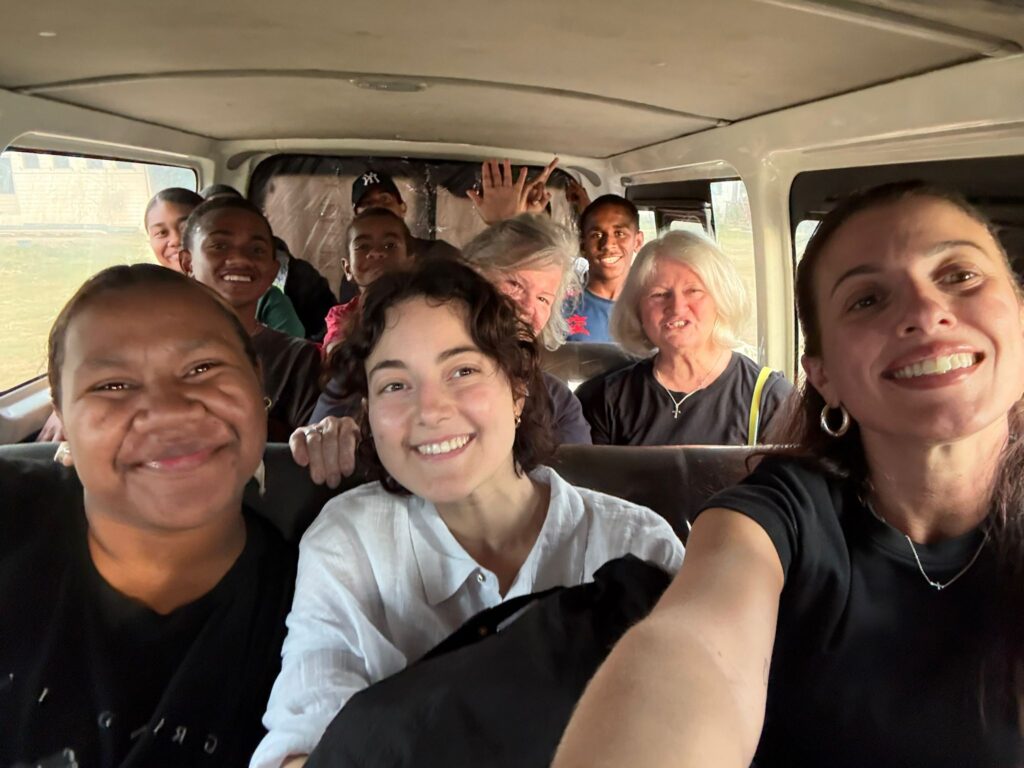
The Adelaide mission team’s five day journey in Fiji began on 16 July. Presvytera Cynthia and I travelled with Niki, Marie, Victoria and Christen, moving together from packing tables to village roads, from church services to family homes, attending to whatever each day placed before us.
Presvytera and I have been involved with the Orthodox mission in Fiji for thirteen years. We have watched children grow and have sought to guide and mentor them as they entered adulthood. We have seen communities gather around the Divine Liturgy, churches become places of belonging and local clergy take up the pastoral work which continues throughout the year. The names of families, their illnesses, losses, hopes and joys have gradually entered our own lives and prayers.
Each return to Fiji brings us back to people we know. A child who once stood shyly beside the church now greets us as a young man. Someone who once listened during catechism now helps another person understand the Faith. A priest tells us of a household whose circumstances have changed since our previous visit, and a grandmother asks whether we still remember the name of someone for whom we prayed years earlier.
Across those years a veiwekani has formed between Fiji and Adelaide, a bond of kinship and responsibility reaching across the ocean. These are no longer distant names attached to a charitable programme. They belong to our ecclesiastical family.
Back home in Australia, in some of our established parishes, parish life is supported by permanent churches, regular service times, halls, committees, schools, private transport and resources which generations have worked hard to provide. These are great blessings. Yet abundance can also make it possible for the Church to occupy only one part of the week. We attend the Divine Liturgy, speak with one another afterwards and then return to the rest of our lives.
In Fiji, the Church cannot be kept to Sunday. She travels in Father Alexios’s vehicle along the roads beyond Labasa. She enters a vale and stands beside the sick. She is heard in Fijian beneath an iron roof. She is present in rice and flour carried to a family, in a newborn receiving her Christian name, in children taking provisions to other households and in the faithful gathering around the Holy Table.
After thirteen years, this contrast is familiar, though it has lost none of its force. It is the same Orthodox Church, but fewer structures stand between the Gospel and the person before us. Poverty brings real hardship, and holiness does not arise from deprivation. Yet when fewer needs can be handed over to institutions and fewer forms of care can be delegated, relationships carry greater weight. Worship, catechism, pastoral care and practical assistance remain part of one life.
Saint Luke writes that the first Christians “continued steadfastly in the Apostles’ doctrine and fellowship, in the breaking of bread, and in prayers” (Acts 2:42). During those five days, this life of the Church was before us once again: teaching in Savudrodro, prayer inside family homes, food divided according to need, people brought from distant settlements to the Eucharist, Baptism beneath the open sky and the praises of God heard in the language of Fiji.
Some of the preparations for this mission trip had already begun at Holy Trinity in Saweni, where the young people of the parish, including children from Saint Tabitha’s Home, had received donated goods and begun sorting and packing them.
Amphilochios, a young Fijian studying theology at Saint Andrew’s Greek Orthodox Theological College in Sydney, was home in Fiji during his university mid year break. He remained in close contact with us throughout the preparations and helped with customs clearance, the receipt of donations, the purchase of supplies in Fiji and the organisation of the young people.
Through earlier visits, they had learnt how the tins should be counted, how the toiletries were to be divided and what each pack needed to contain. By the time we arrived, they were already managing many of the arrangements themselves.
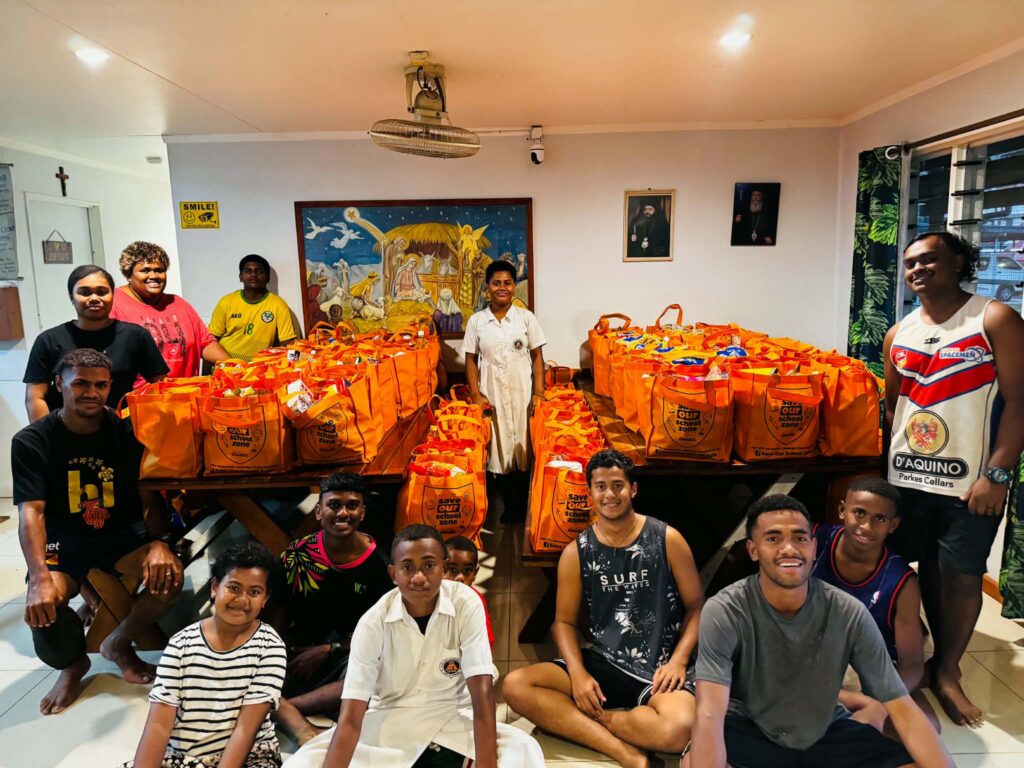
Faith passes from one generation to the next through the Divine Liturgy, catechism and prayer. It is also handed on when a young person notices the need within another household, opens a carton and prepares food for someone they may never have met.
The first Christians placed what they possessed before the Apostles so that distribution could be made according to need. In Fiji, that offering takes the form of food, hygiene products and grocery vouchers passing from people in Adelaide into the hands of the youth at Saweni, and from there into family homes. The donations, customs forms, shopping lists and packing find their purpose when a family receives what it needs with dignity.
The Fijian word vanua means far more than land. It includes people and place, family, belonging, custom and the responsibilities which bind a community together. As we travel through the vanua, its beauty and the hardship carried by many of its people are always close to one another.
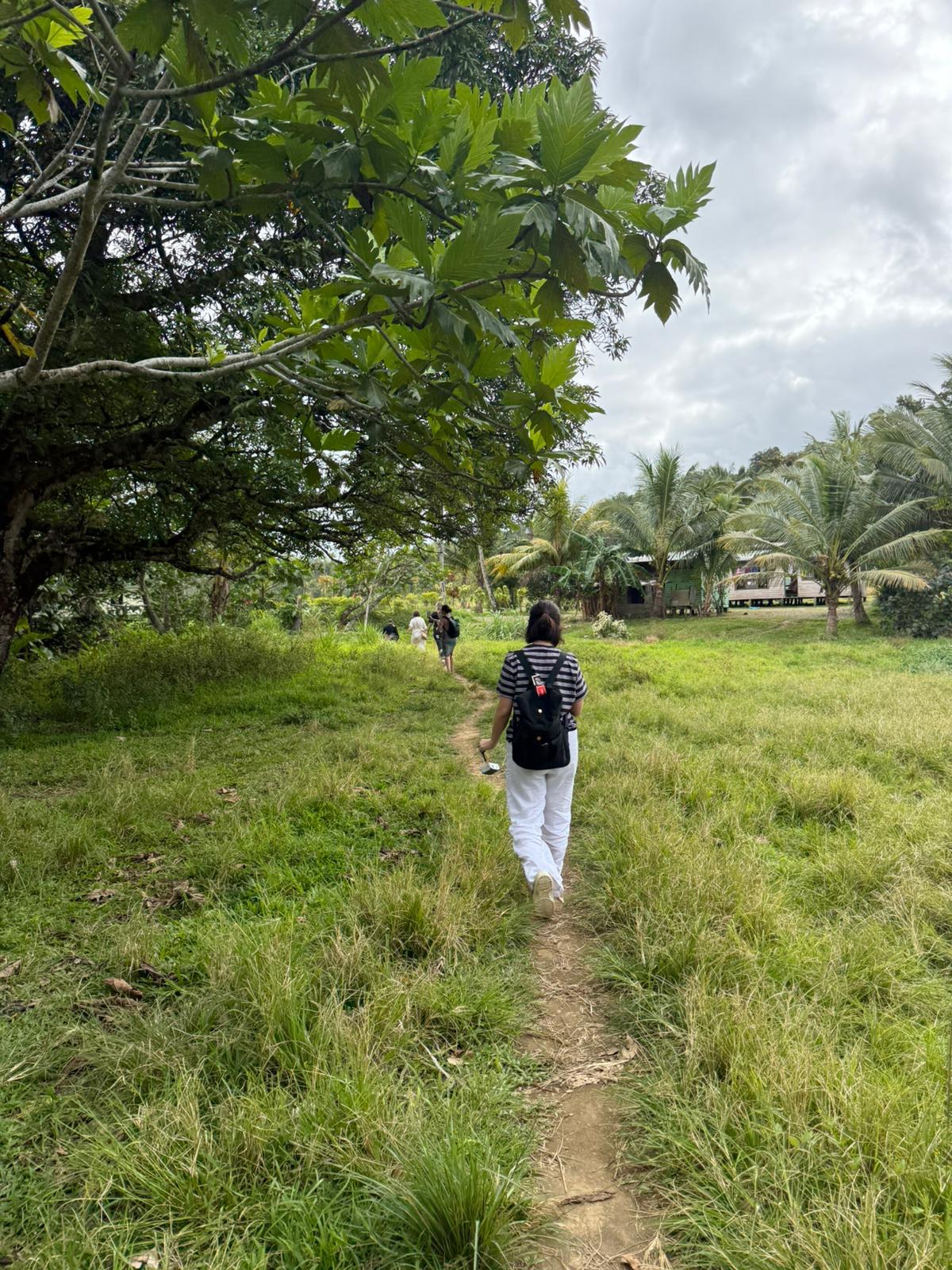
The road beyond Savusavu winds through green hills as the sea appears and disappears between the trees. Coconut palms lean above timber homes, cassava grows in patches of red earth and broad dalo leaves hold the recent rain. Bunches of vudi, the local plantain, hang near breadfruit, pawpaw and mango trees, while the smell of wet soil and crushed leaves enters the vehicle through the open windows.
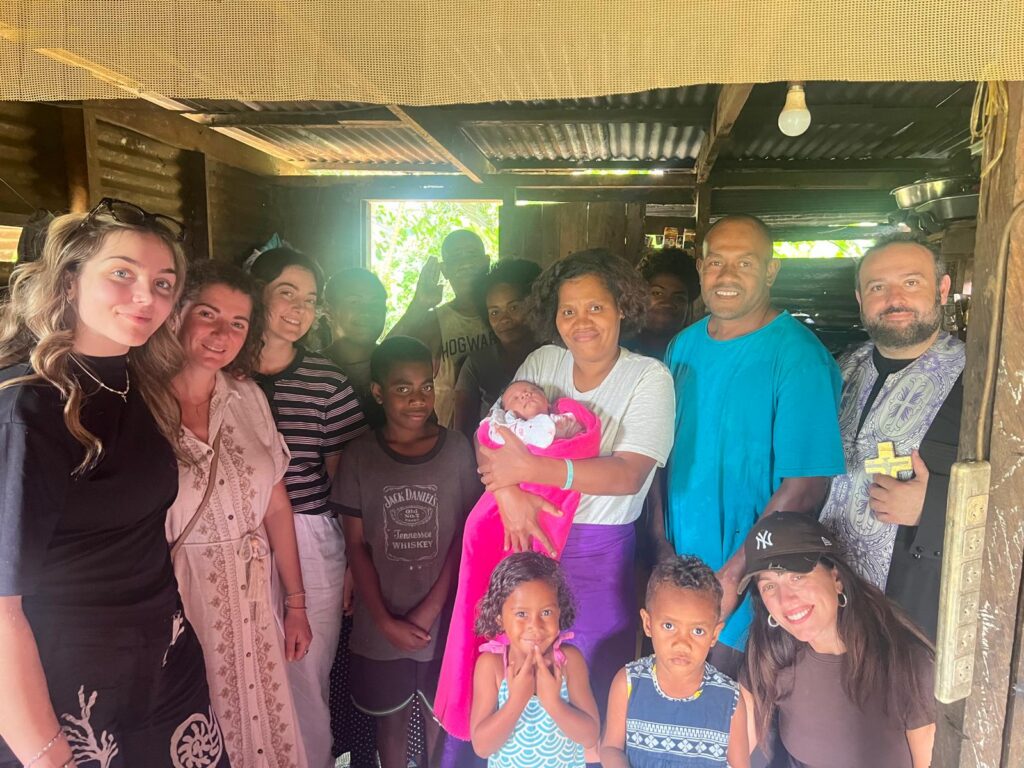
In Savusavu we prepared several grocery and basic needs packs before continuing to Savudrodro, where families connected with the Orthodox mission were waiting. There we celebrated Agiasmos, the blessing of water. The prayers were read, the Cross was lowered into the water and the people came forward to receive the blessing.
We then offered the Church’s eighth day naming prayer for the newborn daughter of Stavroula and Stephanos. Held in the arms of her parents and surrounded by relatives and neighbours, she received the name Victoria.
I gave her that name as a prayer that through her life, and through the witness of her family, the victory of Christ over death might take root and flourish within their isolated village. Before she could speak the name of Christ, her own name was spoken before Him:
“Thanks be to God, who gives us the victory through our Lord Jesus Christ” (1 Corinthians 15:57).
Victoria’s life had only just begun, yet her name had entered the prayer of the Church and was joined to the hope of the Resurrection. Around her stood the people among whom she would grow and who, God willing, may one day form a parish community in that place.
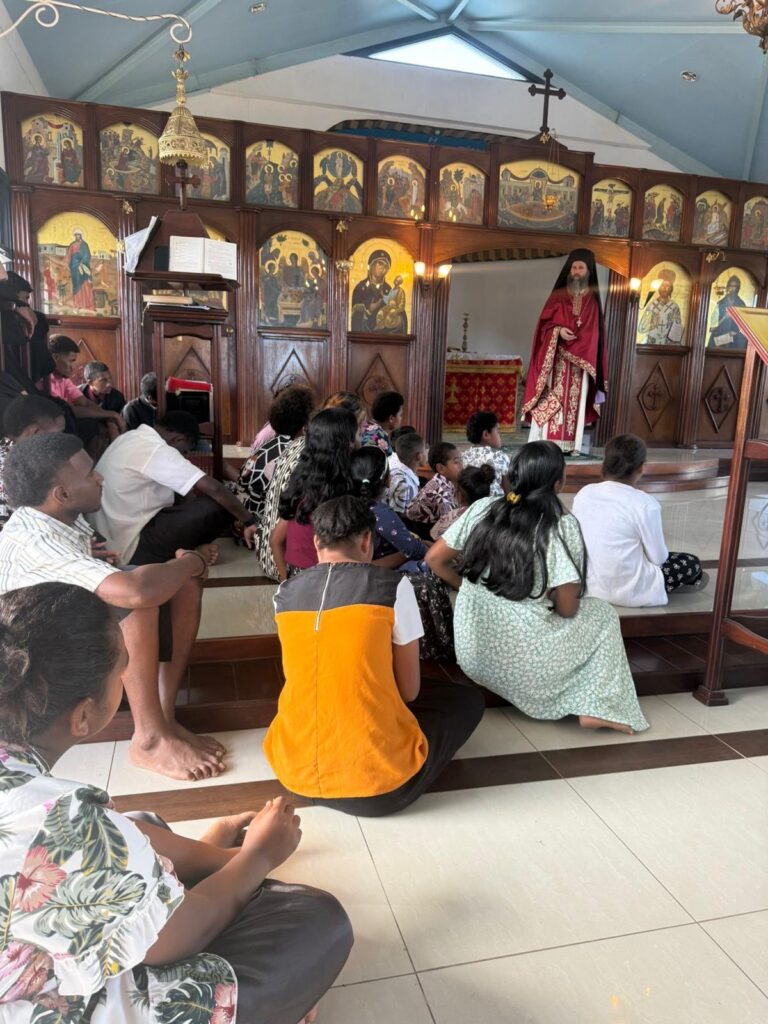
We remained in Savudrodro for almost two hours of catechism. Some had already begun learning about the Orthodox Faith and were considering Baptism, while others had come because a relative or neighbour had spoken to them about the Church.
The conversation followed the Fijian practice of talanoa, allowing people time to speak, listen, ask questions and return to something they were still trying to understand. We spoke about Christ, the Holy Trinity, Baptism, repentance, prayer, icons, the saints and the Divine Liturgy. A question about the sign of the Cross led into the Incarnation, while another about Baptism opened into the meaning of dying and rising with Christ. When someone asked what it meant to belong to the Church, the discussion turned towards confession, the Eucharist and the daily life of prayer.
Children moved between the adults, listening for a while before returning to their games, as the provisions waited nearby. In Fiji, catechism rarely takes place apart from the circumstances of family life. People ask about Christ while facing illness, grief, uncertain work and the effort required to place food upon the table. The Church speaks of the Kingdom while sitting among the realities people live each day.
From Savudrodro we continued towards Labasa, stopping to distribute supplies and grocery vouchers along the way. Some homes stood close to the road beneath coconut and mango trees, while others could be reached only by turning onto smaller tracks and travelling further into the settlements.
The salt air of Savusavu gradually gave way to the warmer country around Labasa. Sugarcane stretched across the fields, its leaves moving together in the wind. Cattle grazed beside the road and smoke rose in the distance. As evening approached, the smells of family meals came from the houses: onion, garlic, turmeric and curry leaves frying over small stoves, roti warming upon a tawa, cassava boiling in large pots and coconut milk being prepared for dalo leaves and other dishes.
We reached the Church of Saints Athanasios and Nicholas as the sun was setting. Father Alexios received us and told us which families needed to be visited. He knew who was sick, who had recently buried someone, which household was short of food and which homes would become difficult to reach after dark.
Following him along roads he had come to know through years of pastoral service, we found that the food brought us to the doorway, while the visit soon went much deeper.
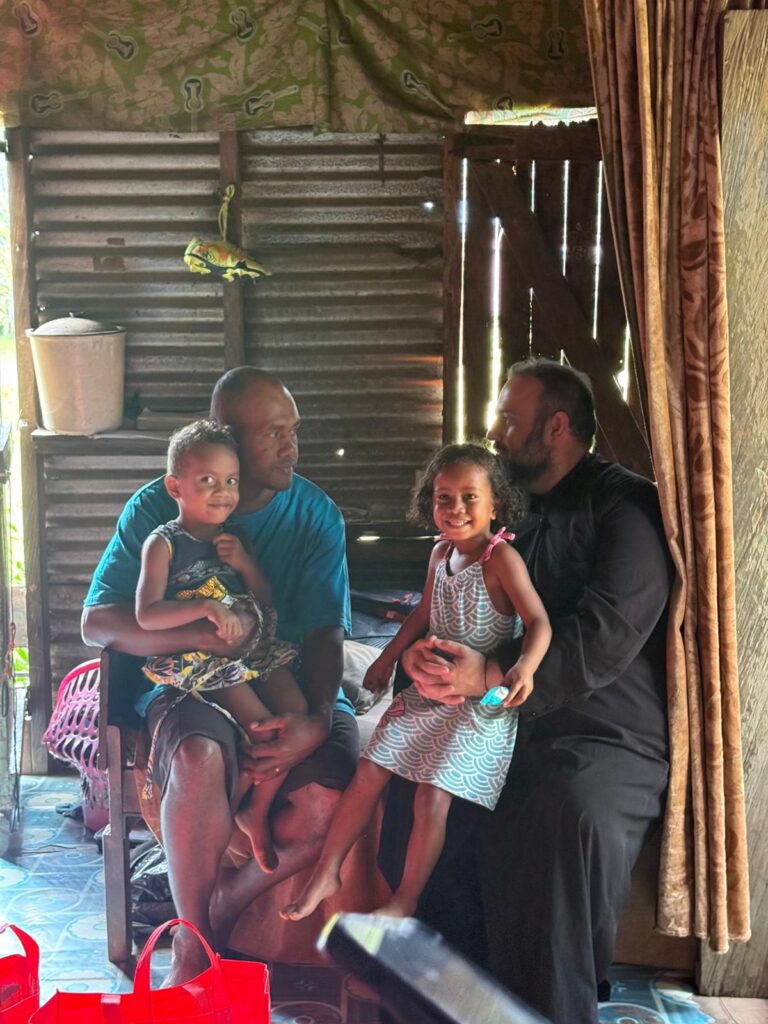
Many of the homes are simple timber or corrugated iron vale. Shoes and sandals remain outside. Family photographs, icons, calendars and children’s schoolwork hang upon the walls. A Bible may rest on a small shelf beside medicine, an enamel cup and a torch kept ready for the night.
We arrived with food and vouchers, yet they received us as guests. Presvytera Cynthia and the women in our group sat close to the mothers, grandmothers and children, while we listened as people spoke about illness, death and the pressures upon their households.
The words vinaka vakalevu, thank you very much, followed us from one home to another. They were spoken with smiles, with hands held tightly and sometimes through tears. Hardship had never taken from these people their instinct to welcome, to share and to give thanks.
Saint Paul speaks of those who are “sorrowful, yet always rejoicing; as poor, yet making many rich; as having nothing, and yet possessing all things” (2 Corinthians 6:10). We have encountered this spiritual wealth many times in Fiji, where a family receives assistance and immediately searches for something it can offer in return.
Back home, much assistance reaches people through organisations, professional services and established welfare programmes. These services protect many who might otherwise be forgotten. They can also allow us to help without entering another person’s life, to make a donation without learning a name and to answer a need from a distance.
Inside the homes around Labasa, that distance disappeared. The provisions brought us across the threshold, and then came the story of an illness, the name of someone who had died, the tears of a grandmother and the prayers of the Church.
In one home, a grandmother spoke of someone she still mourned. Her hands, marked by years of planting, washing, cooking and caring for children, rested in her lap as she remembered the person’s character, the work they had done and the place they had held within the family.
Her voice changed. She lowered her eyes and began to weep. The children remained beside the doorway and the evening meal continued cooking nearby, while coconut oil, kerosene and wood smoke lingered in the room. Sorrow held within her for a long time had finally found words.
We remained with her and cried. There was nothing to explain. Her loved one was named, her sorrow was heard and, when the service book was opened, that name entered the prayer of the Church.
In another house, sickness had changed the order of family life. Someone needed to remain beside the person who was unwell, work had become uncertain and the cost of food, medicine and transport placed further pressure upon people already living with little. A mother drew her child closer as the prayers began and made the sign of the Cross.
Elsewhere, a father stood near the doorway and said very little until the name of a departed relative was mentioned. The sorrow he had kept within himself became visible, and he asked that the person be remembered during the Divine Liturgy.
A pack of groceries can place food upon an empty shelf and a voucher can ease the pressure of the coming week, yet neither can return the person whose place remains empty at the family table. We listened to what each family wished to tell us, and then the service book was opened.
“Is anyone among you sick? Let him call for the presbyters of the Church, and let them pray over him” (James 5:14).
Prayers were read over those who were unwell, petitions were offered for healing, strength, peace and consolation, and the departed were commemorated by name. Beside beds, cooking pots, schoolbooks and family photographs, each person was brought before God in prayer.
Many thanked us for the food, but their deepest gratitude came after the prayers. A mother was thankful that her child had been blessed, a widow held the priest’s hand because her husband’s name had been commemorated, and an elderly person asked when the Church would return. More than anything, they wanted to know that the Church remembered them.
There is a vakavinavinaka, a spirit of thanksgiving, within the people of Fiji which lives beside illness, poverty and bereavement. It appears in the smile of someone whose body is in pain, in a family searching for something it can offer its visitors and in the grandmother who gives thanks because someone she loves has been remembered in prayer.
The groceries matter, as do the vouchers and other practical assistance, yet people often speak with greater joy about the prayers, because the prayers assure them that they remain within the life of the Church.
The following morning, I served Matins, Agiasmos and the Divine Liturgy at Saints Athanasios and Nicholas. The church in Labasa is the centre of a parish spread across a wide region, where distance, difficult roads and limited transport separate Orthodox families from one another.
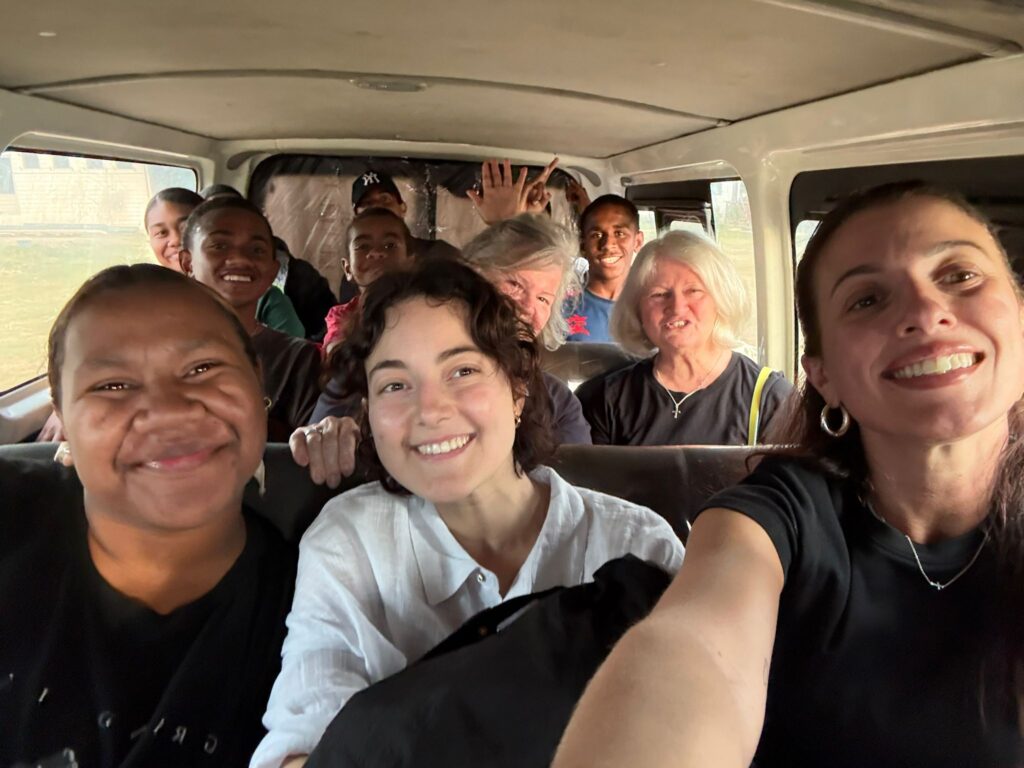
During the services, Father Alexios travelled repeatedly between the church and the surrounding settlements, bringing parishioners who had no other way of attending. He arrived with one family, helped them into the church and then left to collect another. His vehicle could be heard outside before more people appeared at the door. Some came from a considerable distance, while others were elderly or unwell and could never have reached the church alone.
Back home, the time of the Divine Liturgy is announced and the priest generally waits for the people to arrive. In Labasa, Father Alexios spends part of the service going out to find them. The vehicle returns with one family and leaves again for another, until people who live far apart stand beside one another before the same Holy Table.
Saint Luke writes of the first Christians gathering in the temple and breaking bread “from house to house” (Acts 2:46). In Labasa, the movement still runs both ways. The priest goes from the church to the homes, brings his people to the Eucharist and then returns to their illnesses, questions and daily needs.
After the services, tea, bread, fruit and food prepared by the parishioners were placed upon the tables. Curry, coconut and warm roti mingled with the incense still lingering in the church, while the talanoa continued as people asked more questions about the Faith. Children ate and played nearby, adults remained to speak with Father Alexios and people who lived far from one another stayed for a while, sharing news, laughter and the burdens they carried.
We also spent time with Father Alexios and Presvytera Sevastia, together with Presvytera Maria, the widow of the late Father Barnabas Nair. Father Barnabas served the mission in Labasa until his sudden repose, and his absence is still felt by those who prayed with him and received his care. Father Alexios now travels roads Father Barnabas once knew, visits the same communities and offers their names at the Holy Altar.
By Saturday afternoon we were back on Viti Levu, travelling towards Holy Trinity in Saweni. There we were received by Archimandrite Father Meletios Pantic, Chancellor of the Holy Metropolis of New Zealand and the priest responsible for its mission throughout the South Pacific; Father Timothy Triantafyllou, parish priest of Holy Trinity; Presvytera Lydia; and the children of Saint Tabitha’s Home.
Before turning to the remaining supplies, we stood at the grave of the recently reposed Father Bartholomew of blessed memory. His grave lies in front of Holy Trinity, only a few steps from the cruciform baptistery and the church he served.
Father Bartholomew was the first native Fijian Orthodox priest, and his life belongs to the history of the Church in Fiji. The faithful pass his resting place as they approach the church, the bells sound above it and children cross the grounds nearby.
Presvytera Lydia stood with us as we prayed for his repose. The palms moved above us in the afternoon air. Holy Trinity stood before us, and beneath the earth rested a priest who had spent his life among the people still gathering there.
The remaining grocery and basic needs packs had already been prepared by Amphilochios and the young people. Approximately twenty five children and adults joined the clergy, Niki, Marie, Victoria and Christen, together with Kyria Ioanna and Kyria Maria from Melbourne, Kyrio Ilia our beloved builder from Greece and the convoy left Saweni for Koroipita and the surrounding communities.
Back on the roads of Viti Levu, rain trees and coconut palms shaded the way. Cassava, dalo and bele grew beside the houses, laundry moved in the afternoon breeze and smoke from cooking fires drifted through the yards.
The children of Saint Tabitha’s stood at the centre of the distribution. They lifted the packs from the vehicles and carried them towards the houses as other children appeared from behind the homes and watched them approach. Some came forward immediately, while others remained near their mothers until greetings had been exchanged.
One of the children lifted a pack containing rice, flour and toiletries and carried it towards a home where another child stood watching from the doorway. During the preparations, these had been items to count and divide. Here they belonged to a family.
The Fijian word loloma speaks of love, mercy and a gift offered from the heart. The food was one expression of that loloma, together with the way the children entered each yard, greeted the family and remained during the prayers.
At Koroipita, the children saw what the supplies meant once they had left the packing tables. They stood quietly while families spoke and while names were given for the sick and departed. The work itself was teaching them the life of the Church.
As afternoon gave way to evening, smoke settled between the homes of Koroipita and the air smelled of cassava, curry and coconut milk. Children continued running between the houses while adults prepared the evening meal. We would not reach Holy Trinity in time for Vespers, so the service entered Ioanna’s home.
Children, young people, parents and elders filled the house. Some stood while others found a place near the doorway. Icons were placed before them, conversation subsided and the evening psalms began.
Saint Luke’s words, “from house to house,” took visible form as the prayers were heard among cooking pots, school bags and the sounds of village life outside. Children and adults answered in Fijian, and the language in which parents speak to their children and families remember their departed became the language of evening prayer.
“Let my prayer be set forth before You as incense, the lifting up of my hands as the evening sacrifice” (Psalm 140:2 LXX).
The homes visited in Labasa, Koroipita and Saweni were joined within the same petitions. The sick, the grieving and the families who had received us were remembered together before God.
Across Vanua Levu and Viti Levu, over 200 grocery and basic needs packs were distributed, together with grocery vouchers and other assistance. The number records the scale of the work, though it cannot contain the stories told inside those homes. The food entered cupboards and kitchens, while the names entered the prayer of the Church.
By Sunday morning the cartons had been emptied and the vehicles cleared of most of their supplies. The road now brought us to the cross shaped baptistery before Holy Trinity, where Monika, Magdalini, Michaela and another little Amphilochios stood ready to enter the life of Christ.
After Matins, the congregation moved outside and gathered around the baptistery. The tropical sun fell upon the water. White garments, towels, candles and Holy Chrism had been prepared nearby, while families, godparents, children and parishioners stood around the four arms of the cross shaped font.
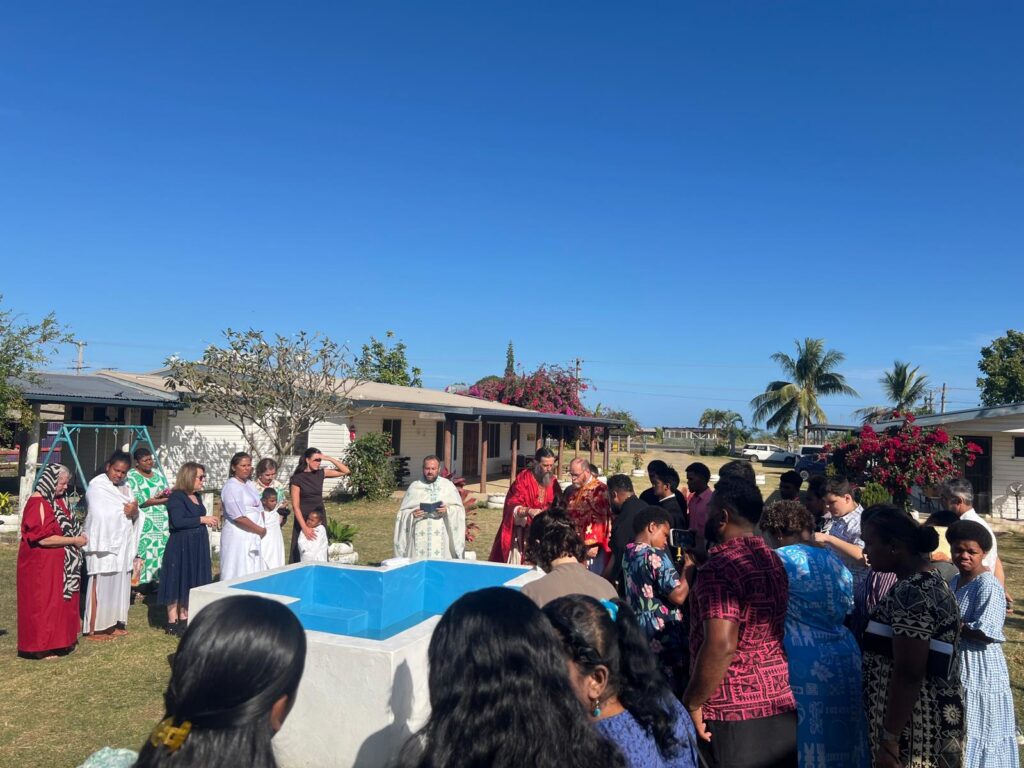
The Baptisms were celebrated by Archimandrite Father Meletios, Father Timothy Triantafyllou and me. The catechumens faced west and renounced the evil one. Turning east, they united themselves to Christ and confessed the Creed. The water was blessed, the oil of gladness poured upon it and each person anointed before Monika, Magdalini, Michaela and Amphilochios descended into the cruciform waters and were immersed three times in the name of the Father, and of the Son, and of the Holy Spirit.
They rose from the water, were clothed in white and, through Holy Chrismation, were sealed with the gift of the Holy Spirit.
“For as many of you as were baptised into Christ have put on Christ” (Galatians 3:27).
The clergy, godparents and newly baptised processed around the baptistery as the apostolic hymn was sung. Their white garments shone beneath the Fijian sun and candles burned in the hands of their sponsors. The procession then turned towards Holy Trinity, and the priests, the newly baptised and the congregation entered the church for the continuation of the Divine Liturgy.
That Sunday was full of ecclesiastical splendour and voice. Children, young people and adults sang together, their responses filling the nave and surrounding the newly baptised as they entered the Eucharistic life of the Church. Byzantine melodies were taken up in Fijian words, and prayers which had crossed centuries and nations sounded at home within the vanua.
In many Orthodox communities throughout Australia and the wider diaspora, we ask whether the next generation will receive the Faith as its own or inherit only its external forms. At Holy Trinity, the children themselves answered that question.
On the day of Pentecost, those gathered in Jerusalem heard the Apostles speaking “in our own tongues the wonderful works of God” (Acts 2:11). Something of that Pentecostal mystery lives at Holy Trinity, where children chant, adults respond and young people read. The prayers of the Church are heard in Fijian, spoken by people whose faith is taking root within their own language and land.
The strength of their voices recalled the “rushing mighty wind” which filled the house at Pentecost, although their power came from more than volume. The Orthodox Church was praising God through the voice of Fiji itself.
These were the same children and young people who had packed supplies, entered family homes and stood beside those who asked for prayer. What they had offered through their hands during the previous days now rose through their voices as praise.
The marriage of Monika and Theodore followed. Monika, born in Fiji and living in Adelaide, had entered the Orthodox Church that morning and now stood beside Theodore, a Greek Orthodox Christian from Adelaide, to be united with him in marriage.
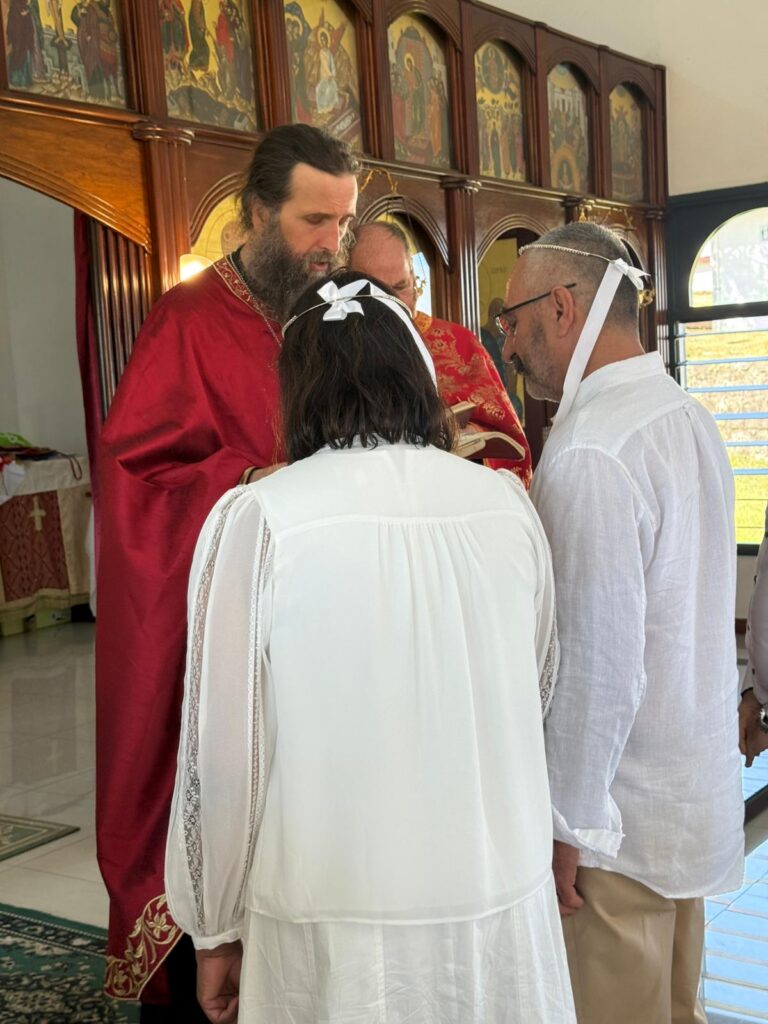
Archimandrite Father Meletios, Father Timothy and I celebrated the sacrament, while their best man, Lambros Demosthenous, who had also travelled from Adelaide, stood beside them.
The crowns were placed upon Monika and Theodore. They drank from the common cup and walked together around the Gospel and the Holy Table while the hymns of the martyrs were sung. Their married life began within the same parish in which Monika’s life in the Church had begun only a short time earlier.
Two forty day churching services followed as mothers brought their infants into the church and placed the beginning of each child’s life within the prayer of the parish. In one morning, Holy Trinity received four new Christians, celebrated the Eucharist, crowned a husband and wife and welcomed mothers and infants.
A banquet followed, prepared by Presvytera Lydia with the help of those beside her. Around seventy people sat at tables covered with curries, rice, roti, cassava, meat, salads, fruit and dishes prepared for the Baptisms and wedding. Children moved between the tables, relatives embraced the newly baptised and Monika and Theodore sat among those who had witnessed both the font and the crowns.
Back home, we can easily treat the meal after the Divine Liturgy as a parish function beginning once worship has ended. At Saweni, the movement from the Chalice to the table remained unbroken. The newly baptised, the newly married, mothers with their infants, clergy, widows, children and visitors ate together as one community.
Only a short distance away lay Father Bartholomew’s grave. His widow moved among the tables, filling plates, welcoming guests and making certain that every child and visitor had eaten.
“Whether we live or die, we are the Lord’s” (Romans 14:8).
Father Bartholomew rested before Holy Trinity while the life to which he had given himself continued nearby. New Christians had risen from the font, a husband and wife had been crowned, mothers had presented their infants and the voices of children had filled the church he served.
Presvytera Lydia mourned and served at the same time, receiving the people as family. The memory of her husband remained in her love and in the worship continuing upon the ground where he rests.
Saint Luke writes that the first Christians ate together “with gladness and simplicity of heart, praising God” (Acts 2:46–47). That gladness was present around the tables at Saweni as plates were filled, chairs moved to make room for another person and every guest was urged to eat more. Children, young people and adults sang Fijian songs, and the voices which had filled Holy Trinity during the Liturgy now rose around the meal with laughter and repeated words of vinaka vakalevu.
That evening we travelled through Sabeto for Vespers at the Chapel of Saint Paraskevi. Above the valley, the familiar outline of the Sleeping Giant stretched across the mountain ridge, its brow, chest and long form darkening against the final light.
As the hymns of the Holy Prophet Elias began, the children sang with such force that their voices seemed to pass through the open chapel, cross the cane fields and strike the mountain itself, as though they meant to awaken the Sleeping Giant from his long sleep.
Above Sabeto lay the sleeping figure of the mountain, while below the Church honoured Elias, the wakeful prophet who stood before God upon Carmel and Horeb, called Israel out of spiritual sleep and prayed until fire descended from heaven.
His voice once rang across Mount Carmel: “How long will you falter between two opinions?” (1 Kings 18:21). Now the children of Fiji sang the hymns of his feast, their voices moving across the valley like another call to awaken.
The mountain did not stir, but Sabeto had awakened to prayer. Lamps burned before the icons and incense rose beneath the chapel roof, while outside the matangi passed through the leaves, recalling the prophet who went beyond the wind, the earthquake and the fire and covered his face before the gentle voice of God.
As the children’s voices filled the chapel, the words of the ancient evening hymn gathered the mountain, the dying light and the valley into prayer:
“Now that we have come to the setting of the sun and behold the light of evening, we praise Father, Son and Holy Spirit, God.”
The last light rested upon the ridge above Sabeto while the children continued to sing within the chapel below.
After Vespers, more than fifty children and parishioners gathered at Sunny’s Pizza. The hymns of the chapel gave way to laughter, Fijian songs and crowded tables. Above the valley, the Sleeping Giant continued his rest, while below the feast continued through hospitality and vakavinavinaka.
Later that evening, one of the younger girls came and sat upon my lap. She put her arms around me and reached up to touch my beard. She told me that she felt sad because Presvytera was sad. Presvytera Cynthia’s grandmother had reposed, and Presvytera had returned to Adelaide for the funeral.
She said that she wanted to come to our home in Adelaide with all the children. They could pray there together, just as they had prayed in the homes around Koroipita and Saweni on Saturday, and bring Presvytera comfort and the joy of Christ.
The previous day we had explained that several families were mourning people they loved and that we were entering their homes to pray for the departed and remain beside those who grieved. She had taken this into her heart. Presvytera was sad, so the children should go to her, pray with her and stay close.
Her words moved me deeply. After thirteen years of serving among these children, I held her close and said very little while the songs and laughter continued around us. Her small hand remained in my beard, and her wish to carry prayer across the ocean stayed with me long after the evening had ended.
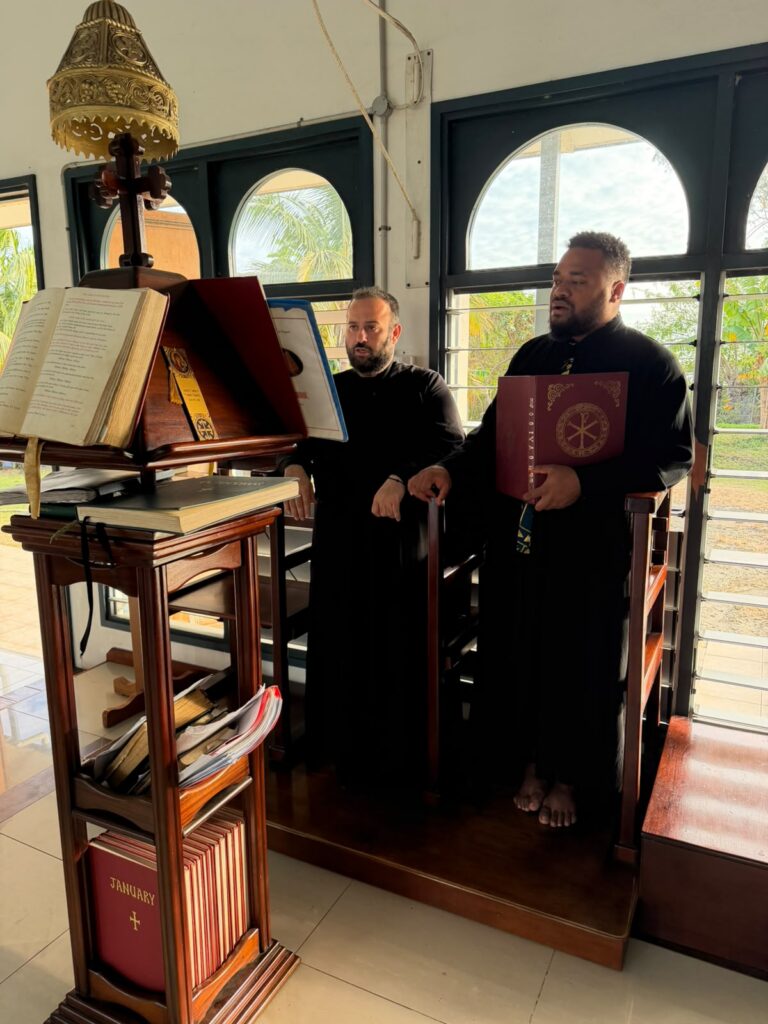
Monday morning brought us once more to Holy Trinity for the Divine Liturgy of the Prophet Elias, with Archimandrite Father Meletios and Father Timothy serving at the Holy Altar, while I led the chanting with Amphilochios, Gabriel and Alexios, Father Timothy’s son. Children, young people and adults joined us, with many of the responses again offered in Fijian.
Each return to Fiji brings before us again how easily the resources of established parish life can place distance between ourselves and the needs of another person.
Along the roads of Fiji, the priest knows the family waiting at the journey’s end. Children learn charity by carrying the food themselves. Catechism unfolds beside the struggles people have brought with them. The language of the people enters the hymns, and the Divine Liturgy continues into the home, the meal and the care of those who suffer.
When the mission journey had ended, the people we had met returned with us, as always, in our hearts and in prayer.
At Savusavu we began by opening cartons and dividing food according to need. Back in Adelaide, another offering is divided. At the Proskomidi, bread is cut from the prosphora and particles are placed beside the Lamb for the living and the departed: for the sick person beneath an iron roof, for the grandmother who wept as she spoke of the person she loved, for Father Barnabas and Father Bartholomew of blessed memory, for the newly baptised and for the families who opened their doors and entrusted us with their names.
The food remains in the homes where it is needed, while the names come home with us. A village beyond Savusavu, a home in Labasa, the baptistery at Saweni, a child’s prayer for Presvytera and a parish in Adelaide are gathered before the same Christ and remembered within the same Divine Liturgy.
This is how each mission journey in Fiji continues: through the people and names entrusted to us, carried into the prayer of the Church and spoken before God.