By Fr. Michael Psaromatis
Greek Orthodox Archdiocese of Australia
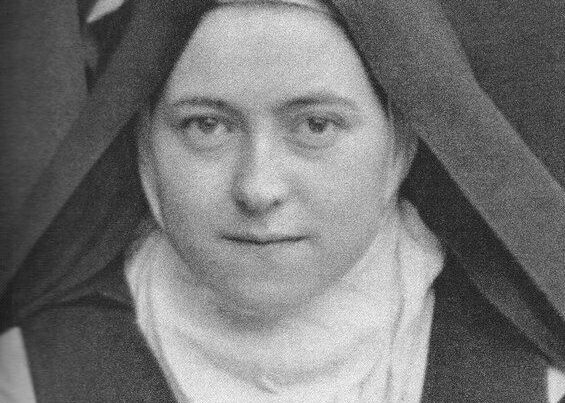
In 1866, Mary MacKillop (1842–1909), then twenty-four, helped open a school in a converted stable in Penola. She and Father Julian Tenison Woods, the local Catholic priest, wanted children from poor families to receive an education. Other women joined them, and from these beginnings grew the Sisters of Saint Joseph of the Sacred Heart (Sisters of St Joseph, “South Australia 1866”). Mary lived and prayed within the Western Catholic tradition. The women who joined her shared prayer, teaching and the demands of a household, accepting a poverty that often left them dependent on help whose arrival they could not foresee. She asked of them a fidelity to Christ that she would herself have to sustain when ecclesiastical authority turned against her.
As an Orthodox priest born in South Australia, I find that the legacy of Mary MacKillop possesses a profound local immediacy because she walked the very soil where my own life and ministry were nurtured. My earliest encounter with her landscape occurred during my childhood, when I would hear stories of her life and learn about her work. During those years, I accompanied my father, Father Stavros, and the few visiting priests who travelled from Adelaide to serve our community in Mount Gambier. We were a small flock receiving the Divine Liturgy scarcely four or five times a year. As I assisted them on those long journeys, we travelled through Penola, a region defined by its striking limestone geography, rich terra rossa soil, and the stark, linear beauty of ancient red gums slicing through the rising mist of the plains. Even then, an unmistakable and quiet sense of grace seemed to hang over that landscape. Years later, travelling those same roads myself as a priest to serve the faithful, I found that this distinct spiritual atmosphere remained unchanged. Looking upon her life through the lens of Eastern Christendom, I see a figure whose witness speaks beyond the divisions between East and West. Her radical commitment to the margins and her unwavering endurance under unjust ecclesiastical authority speak directly to the heart of Orthodox pastoral theology. She stands for me not merely as a local reformer from history, but as a living witness to a liturgy after the Liturgy. Her life is proof that this specific Australian landscape has nurtured a sanctity defined by the ancient Christian call to ascetic humility, deep watchfulness of the heart, and sacrificial love.
The Roman Catholic Church canonised Mary as Saint Mary of the Cross on 17 October 2010, making her Australia’s first canonised saint (Mary MacKillop Place, “Saint Mary of the Cross MacKillop”). In her letters Mary urged the women who served with her to grow in humility and forgiveness, for having given themselves to God they now had to learn to bear with one another. Saint Paul calls us to have the mind of Christ, and the Orthodox phronema describes the mind formed through the Church’s faith, prayer and life, changing how we treat one another as we learn to live in Him (Philippians 2:5–8).
Reading Mary’s letters, I think of the monks and bishops in the Synaxarion who suffered rejection within their own communities. She wrote as a woman trying to hold a congregation together, having to forgive, accept correction and continue praying while asking the same of the women entrusted to her. Their rule bound them to a shared life whose demands the Fathers of the desert would have recognised. Her devotion to Joseph, her dependence on the Eucharist and her love for the Mother of God sustained her through disputes that threatened the congregation itself.
In 1871, the Sisters of Saint Joseph, who had offered shelter to others, found themselves needing somewhere to live. On 22 September, Bishop Laurence Sheil of Adelaide excommunicated Mary for alleged insubordination after she had opposed changes to the rule under which she had made her vows (Bergmann, “The history behind Mary MacKillop’s excommunication”). At issue was whether the sisters would remain one congregation under their own superior or be divided under local diocesan control, a change that threatened the unity of a community already spread across several places (Lange, “At home among the poor”). Mary was defending the common life to which she and the sisters had committed themselves. Disputes among the clergy deepened the conflict, and the penalty remained until February 1872, shortly before Sheil’s death (Thorpe, “MacKillop, Mary Helen”, Mary MacKillop Spirituality Ministry, “Mary MacKillop’s Excommunication”, Wicks, Father Joseph Tappeiner SJ, 2020, pp. 3–5).
Before the excommunication she had written to Bishop Sheil, “I cannot in conscience see the rule altered and remain still a sister”, because she understood her vows to bind her to the rule under which she had made them (MacKillop to Sheil, 10 September 1871, quoted in Brennan, “Fr Frank’s Homily for the 19th Sunday in Ordinary Time 2024”).
Hostility towards the sisters had also grown from an earlier complaint against a priest. In 1870, sisters at Kapunda brought allegations of sexual abuse against Father Patrick Keating to Father Woods. The matter reached the vicar-general, John Smyth, whose investigation led to Keating being ordered back to Europe. In evidence to the subsequent ecclesiastical inquiry, the Jesuit Father Joseph Tappeiner linked this episode to Father Charles Horan’s hostility towards Woods and the sisters (Royal Commission into Institutional Responses to Child Sexual Abuse, Final Report, vol. 16, book 1, 2017, p. 179). Mary had been in Queensland when the reporting occurred. The complaint became another source of conflict around the congregation, alongside the struggle over its rule and government (Catholic News Service, quoted in Martin, “Josephites Weigh in on MacKillop’s Excommunication”, 2010).
During her excommunication, Tappeiner advised Mary and helped the sisters, taking her objections seriously. He and another Jesuit judged the sentence unjust and invalid and permitted her to attend Mass and receive the sacraments. Writing to Father Woods on 21 November 1871, Mary called Tappeiner’s kindness “a just, thoughtful charity” (Wicks, Father Joseph Tappeiner SJ, 2020, p. 3). Help also came from Emanuel Solomon, a Jewish businessman who made two properties in Adelaide’s Flinders Street available to the displaced sisters (Engledow, “The Saint and the merchant”, National Portrait Gallery, 2010).
Writing to Father Woods in November 1871, she recalled the “calm beautiful presence of God” she had experienced during her excommunication, and also the sleeplessness of lying awake, troubled by the sentence and what it might mean for her before God (Brennan, “Fr Frank’s Homily for the 19th Sunday in Ordinary Time 2024”).
Tappeiner later reported that Mary was distressed by attacks on the bishop and tried to keep the sisters from becoming bitter, even as she continued to defend their congregation (Tappeiner, letter of 30 October 1872, quoted in Wicks, Father Joseph Tappeiner SJ, 2020, pp. 4–5). She asked one of the sisters to “pray that he may have light” (Cresp, “For a world that needs love: Mary MacKillop and the Sacred Heart”). In 1873 she travelled to Rome to seek Pope Pius IX’s recognition of the congregation and its rule within the Church whose authorities had wronged her (Casey, “Mary MacKillop meets Pope Pius IX”).
Solomon’s offer of somewhere to live recalls the Good Samaritan’s provision for an injured man, when he left money with the innkeeper so that care would continue after his departure (Luke 10:25–37). Mary, who had found shelter for others, had to receive it herself. When appeals to forgiveness come before anyone has listened properly to what happened, a person wounded within the Church may find such help especially precious.
Forced out of the Alexandrian Patriarchate through accusations and jealousy, Saint Nektarios struggled to find his footing before continuing his ministry in Greece (Patriarchate of Alexandria, “Sophronios IV (1870–1899)”, Patriarchate of Antioch, “St. Nektarios the Wonderworker, Bishop of Pentapolis”). Saint Symeon the New Theologian pleaded for leniency towards monks who had attacked him after the Liturgy, remaining concerned for men who had rejected him (Orthodox Church in America [OCA], “Venerable Simeon the New Theologian”).
In trying to forgive, we can find a painful thought returning after we believed we had laid it to rest, until even prayer becomes another argument with the person who injured us. Saint Mark the Ascetic counsels those struggling with anger to remember Christ’s humility, His sufferings and His Resurrection (Mark the Ascetic, Letter to Nicholas the Solitary, Philokalia, vol. 1, pp. 154–156). The watchfulness we call nepsis involves recognising when the defence of a just cause has begun to turn into a wish to humiliate an opponent. Thoughts and suggestions, the logismoi, present themselves before we have consented to them, and we must learn to discern which to entertain and which to refuse (John Cassian, Conference 1, 17–19). We also have to distinguish, as Mark does, between correction offered in malice and correction made out of reverence for God and respect for truth (Mark the Ascetic, On the Spiritual Law, 38).
Mary of the Cross was responsible for sisters whose future she could not secure, while asking them to pray for Bishop Sheil. Patient endurance, hypomone, meant continuing to care for them before she knew how the dispute would end. Saint Isaac the Syrian writes of sorrow drawing a person back to prayer and of the heart being sanctified through the remembrance of God, while insisting upon the grace needed to endure (Isaac the Syrian, “On the proper way to face sorrows”, reproduced by the Orthodox Metropolitanate of Hong Kong and Southeast Asia, 2012). We may begin to recognise anger or fear we had scarcely understood in ourselves, needing God’s help in the purification the Fathers call katharsis.
The Orthodox Church remembers Saints Boris and Gleb as passion-bearers. In the account of Boris’s death, he prays for the brother who has sent his killers (OCA, “Martyrs and Passion-Bearers Boris and Gleb”). Christ’s command to love our enemies requires us to relinquish revenge even when a wrong must still be resisted (Matthew 5:44). In His kenosis, described in Philippians 2, He emptied Himself, taking the form of a servant and becoming obedient unto death on the Cross. We seek freedom from hatred by following the One who prayed for His persecutors and rose from the dead, in the hope of sharing His risen life.
In 1867, the year after the Penola school opened, Mary was establishing schools in Adelaide and finding ways to support the sisters who taught in them. “We must teach more by example than by word,” she wrote that year, conscious of what a child learnt from the conduct of the woman at the front of the classroom, including how she treated someone who struggled (Reynolds, “International Day of Education”). Saint Kosmas of Aetolia had urged communities to establish schools where children could learn the faith (OCA, The Orthodox Faith, vol. III, “The Greek Church”). Mary wanted the children to learn how to live as Christians from the women who taught them.
In the early years the sisters often made their homes in the very places where they taught. At Robe they lived in the church’s sacristy and used the church itself for lessons, while at Perthville they lived in the church gallery. Others lived in tents on the goldfields or alongside railway workers, sometimes enduring shortages of food and isolation with little access to the sacraments (Mary MacKillop Heritage Centre, “For the Sake of the Poor”). They could stay among the families they served, though after a day’s teaching they still faced the strain of sharing accommodation. The desert Fathers wrote about the difficulty of surrendering one’s own will, and a crowded household with few resources could ask a sister to give up the space, time or rest she had hoped to keep for herself.
In the Life of Saint Anthony, Saint Athanasius describes the young ascetic learning from the people he visited, noticing one man’s freedom from anger and another’s love for his neighbours alongside their fasting and prayer (Athanasius, Life of Anthony, 3–4). Saint Mary of Egypt describes seventeen years of struggle in the desert with the desires and memories of her former life (OCA, “Venerable Mary of Egypt”). The Josephite sisters had a rule ordering their days around prayer and work, but they still had to learn how to live with the women beside them. Repentance could require accepting correction from a sister with whom they had spent the whole day teaching, and whose faults were as familiar as their own.
Mary expected the sisters to remain humble after years spent keeping a school going, when success might tempt them to insist upon their own judgement or expect praise. Saint John Climacus warns of spiritual labour nourishing pride when humility is absent, and Saint Hesychios asks us to watch the thoughts through which self-admiration and resentment acquire their hold (Kariatlis, “Humility as Doxological Contrition: The Foundation of the Christian Life”, Hesychios, On Watchfulness and Holiness, 1, 6, 52, 57–59, 69). Mary could argue their case respectfully without abandoning her judgement, just as the Christ who washed His disciples’ feet remained their Lord and Teacher (John 13:3–15, OCA, The Orthodox Faith, vol. IV, “Humility”).
The sisters also had to be willing to do work they knew would be waiting for them again the following morning. Saint Sergius of Radonezh began in the Russian forest with cells and a small church, carrying water and baking bread for the brethren as others gathered around him. The settlement became a community ordered by a common rule, its prayer sustained within the labour of feeding and caring for those who had come (OCA, “Repose of Venerable Sergius the Wonderworker, Abbot of Radonezh”).
Mary asked the women who joined her to give their lives to the work, a commitment I have learnt to appreciate through my involvement in the Orthodox mission in Fiji. When I return from Fiji, the children still need to be taught and cared for by people who live there and depend upon the community’s continuing support. Her schools depended on people willing to share the work where money and accommodation were scarce, and the women who joined her congregation committed themselves to that work through a shared religious life. They prayed together and undertook vows, then had to remain with one another through disagreements and disappointment. The humility Mary commended was needed in their own houses as much as in the classroom. A priest who comes from elsewhere has to learn how a community is sustained between his visits, listening to clergy and faithful who have spent years living and serving there. The Gospel asks us to enter their lives with humility, attentive to their language and customs as we share the faith and sacramental life of the Church (Holy and Great Council, The Mission of the Orthodox Church in Today’s World, 2016, introduction).
On Spruce Island in Alaska, Saint Herman continued his life of prayer far from the institutions that had first supported him, caring for children. During an epidemic at Kodiak, he nursed the sick at risk to himself. The mission’s history records resistance to the exploitation of Indigenous people by Russian traders and remembers an Aleut woman, Sophia Vlassov, who became Herman’s disciple and worked at his school (OCA, “The Alaskan Mission (1794–1870)”, “Chronology of the Life of Saint Herman of Alaska”). The people who received the faith helped sustain the mission, as Sophia did through her work at the school.
“Oh Mamma let us belong to Him completely and He will take care of us all”, Mary wrote to her mother in January 1868 (Sisters of St Joseph, “Mary MacKillop — A Mother’s Love”). Born in Fitzroy on 15 January 1842, she was the eldest of Alexander and Flora MacKillop’s eight children and had worked as a shop assistant, governess and teacher to help support her family. Her Scottish parents had little money, and she knew what it cost to go without (Thorpe, “MacKillop, Mary Helen”, Australian Dictionary of Biography, 1974). She was reassuring her mother from within the poverty they had shared, while trying to provide for an expanding congregation. The schools brought further expenses, and the early Josephites relied on donations for their teaching, travel and daily needs without knowing who would next be willing to help (Hamilton, “The Mary MacKillop story”, 2010). Mary had to ask for money and decide how to spend it.
The first Rule, which Father Woods sent Mary on 31 May 1867, prescribed spare furnishings and straw beds in a shared dormitory. A woman could enter without a dowry, and there were to be no class distinctions among the sisters, so poverty would not prevent her from joining them. Small communities were to teach and visit people in scattered settlements, becoming “the companions of the children” through gentleness and patience (Lange, “At home among the poor”, citing the 1867 Rule).
In Rome, Mary was required to change the rule on property. Pius IX insisted that the sisters acquire property for financial security, and she agreed to revise their early commitment to absolute material poverty, a decision Father Woods found deeply troubling (Mary MacKillop Spirituality Ministry, “History” timeline, 1873–1874, Mary MacKillop Heritage Centre, “For the Sake of the Poor”). The schools needed premises and the sisters needed somewhere to live. She accepted ownership to provide for them, departing from the rule under which she and Father Woods had begun the congregation.
In practising aktemosyne, monastic non-possession, we renounce possessions and struggle against the wish to own and control. Orthodox monasteries may hold land and buildings in common while their members renounce personal property, and a schoolhouse can serve a vocation of poverty through the use a community makes of it. Mary wanted the sisters free to serve God among people who could never have paid for their work. Saint Basil writes of goods entrusted to a community as belonging to the Lord, to be cared for without being hoarded, and allows even an assigned task to give way when someone helpless urgently needs assistance (Basil of Caesarea, Letter 22, 1–2). A sister looking after the school supplies would need to judge how to make them last while remaining willing to share what another person needed.
The absence of class distinctions brought women together as members of one household, sharing responsibility and accepting correction while making allowance for the difficult sister or the exhausted teacher. In fourth-century Egypt, Saint Pachomius had organised monasteries around a common life of shared food, clothing and work, with each monk’s labour helping to support his brothers. He also cared for the sick and relaxed their fasting when recovery required it (OCA, “Venerable Pachomius the Great, Founder of Coenobitic Monasticism”). Speaking to the clergy of Adelaide in 2023, Archbishop Makarios of Australia drew upon Canon 102 of the Quinisext Council to insist that pastoral judgement consider each person’s circumstances and what will help them towards salvation (Archbishop Makarios, address to the clergy of Adelaide, 2 June 2023, quoted in VEMA, 3 June 2023). Under a common rule, people of differing strength and needs had to give up their own preferences and attend to one another’s weakness as they learnt to live together.
Saint John of Damascus describes providence, pronoia, as God’s care for His creation, within which human beings remain free and responsible (John of Damascus, Exposition of the Orthodox Faith, II.29–30). The sisters’ poverty required them to accept that they could not secure their own future, entrusting themselves to God while struggling against the desire to possess and control (Archimandrite Zacharias, “On Monasticism — II”). Ecumenical Patriarch Bartholomew joins trust in providence to freedom from possessiveness and the offering of ourselves in love (Ecumenical Patriarch Bartholomew, Catechetical Homily for the Opening of Holy and Great Lent, 2026).
Saint Maximus the Confessor speaks of the logoi, the divine purposes by which creatures have their being in relation to Christ the Logos. Through the created world we learn thanksgiving and enter into communion with its Maker (Metropolitan Kallistos Ware, “Through Creation to the Creator”). The food needed by a school and the shelter needed by a household are gifts of God’s creation. The child we feed is someone God has created and loves, and the house offered to displaced sisters gives them somewhere to pray and continue their common life.
The sisters also needed a form of governance that would keep the congregation together. A stable rule and leadership across diocesan boundaries could protect the common life from being unsettled by each change of bishop. Mary sought protection from Rome on behalf of sisters who had committed themselves to one congregation and needed to know that this common life would endure.
An Orthodox stauropegial monastery comes under an authority beyond the local diocesan bishop, an arrangement that can support a community whose work extends across diocesan boundaries. The Orthodox Church in America’s statute, for example, provides for direct oversight by the Primate, with accountability to the Holy Synod, of institutions whose mission typically extends beyond a single diocese (OCA, Statute, Article XIV, §§1–3).
Disputes over who would govern the sisters continued after Mary’s excommunication was lifted. Bishop James Quinn’s insistence on diocesan control led to the sisters’ withdrawal from Queensland, where the last Josephite community left in July 1880 (Sisters of St Joseph, Mary MacKillop’s Brisbane, 2020, pp. 5–6). Renewed conflict with ecclesiastical authorities brought Mary’s departure from Adelaide in 1883. She continued to guide the sisters through letters, asking them to meet their difficulties with “humility and charity and truth”, help one another and be patient with one another’s faults (McCreanor, “Circumstances call Mary MacKillop to Sydney… 140 years ago”).
In 1885 Mother Bernard replaced Mary as Superior General, and Mary remained as her assistant. She continued to travel and visit the sisters, now working under the woman who held the office she had previously occupied. She was later elected Superior General again (Mary MacKillop Place, “Saint Mary of the Cross MacKillop”, Hamilton, “The Mary MacKillop story”).
Saint Theodore the Studite knew the cost of refusing those in authority when he opposed violations of Christian marriage and, later, the suppression of the holy icons, suffering exile and imprisonment for his resistance (OCA, “Venerable Theodore the Confessor, Abbot of the Studion”). His disputes were different from Mary’s, but we remain responsible for our actions even under obedience. Mary had to answer for the promises she had made and for the women entrusted to her, including when her judgement placed her in conflict with a bishop.
Mary knew the sisters’ needs through living and working with them, and that experience gave her grounds to challenge decisions about their future. In my own parish, I depend on women who teach, organise and care for others, whose judgement deserves my attention especially when they question a decision I have made.
The sisters also cared for people outside the schools, many of whom had few others to turn to. In South Australia they cared for orphans and older people, sheltered women and visited prisoners, while Josephites later established a school for Māori children in New Zealand (Sisters of St Joseph, “South Australia 1866”, Hamilton, “The Mary MacKillop story”).
At Penola, Mary came to know Annie Brice, a young Boandik girl whom she taught to read and write. Mary had arrived there in 1860 as governess to the Cameron children, and she also taught Annie, who spent time at the schoolhouse at St Joseph’s. In April 1867 Mary wrote to Father Julian Tenison Woods about another Aboriginal mother who wanted her daughter to receive a Catholic upbringing and learn to read and write as Annie had. Annie later helped to educate other Aboriginal children at Christina Smith’s school in Mount Gambier. Her story is recorded by her descendant, the Boandik writer Michelle Jacquelin-Furr (Jacquelin-Furr, “Brice, Annie”, Indigenous Australian Dictionary of Biography, 2019). Aboriginal children were among the pupils at the Josephite school in Penola during the later nineteenth century (Mary MacKillop Penola Centre, “Families”).
Mary also supported the work of her brother Donald, a Jesuit missionary at Daly River, and proposed sending sisters to assist Aboriginal women there. The plan remained unfulfilled, with the Jesuit superiors’ concerns about the sisters’ safety, the isolation and the mission’s uncertain future weighing against it (O’Kelly, “The Saint and her Sibling: Mary and Donald MacKillop”, 2010).
Archbishop Stylianos of blessed memory wrote of Aboriginal Australians with an affection sharpened by his awareness of what colonisation had cost them. In “Aborigines”, written in 1979, he called them “the most authentic children of the earth”, honouring their relationship with the land while confronting the racial contempt directed towards them (Archbishop Stylianos, “Aborigines”, Australian Passport, trans. Vrasidas Karalis, 2002, p. 183). In “Bicentenary”, written in 1987, he questioned a celebration of colonial achievement that left Aboriginal suffering out of account (Archbishop Stylianos, “Bicentenary”, Εν γη αλλοτρία ΙΙΙ, 1996, p. 90). Because I love the limestone country of my childhood, I must also listen to Boandik people as they tell the histories of their families and their belonging to that country.
In his 1990 essay “Faith and the Promised Land”, Archbishop Stylianos acknowledged the injustice of Aboriginal dispossession and recognised in Indigenous reverence for the natural world an affinity with the Christian mystical tradition (Archbishop Stylianos, “Faith and the Promised Land: Theological Perspectives of the Land”, pp. 134–135, quoted in Adrahtas, “Innovation within Greek Orthodox Theology in Australia”, 2012, pp. 242–244). In 2001 he gave his public support to the National Council of Churches in Australia’s statement endorsing the Bringing Them Home report and its recommendations. The statement acknowledged the suffering caused by the removal of Aboriginal and Torres Strait Islander children from their families and committed the churches to work for reconciliation, including helping people obtain records of their own lives (NCCA, “Bringing Them Home Report and the churches”, 21 May 2001).
“Never see a need without doing something about it”, Mary urged (Sisters of St Joseph, “Josephites Today”). Writing to the sisters in March 1900, she urged them to “seek first the poorest, most neglected parts of God’s vineyard” (Cavanagh, Celebrating the Gift of Mary MacKillop, p. 4). When choosing where to open a school, the sisters were therefore to begin with families who had little money or influence, even when that poverty would make it difficult to support the sisters themselves.
I find that insistence uncomfortable when I think about my own parish. At St Dimitrios in Salisbury, parish business can easily fill the week, leaving little time for the people beyond the church doors for whom I am also responsible. Saint James is blunt about wishing someone well while leaving them without food or clothing (James 2:15–17), and Mary expects us to try to help however busy we already are. The sisters had to keep responding to the needs of their schools after the first enthusiasm had passed and another expense arrived. God awakens and sustains our desire to serve, yet we have to respond freely to the grace He gives, acting upon it and repenting when we fail (Breck, “Salvation Is Indeed By Grace”). This cooperation, which the Church calls synergeia, can be difficult to sustain through fatigue and disappointment. There are times when we have to ask God for the willingness we once took for granted, trusting Him enough to return to the classroom or prepare the meal while the weariness is still with us.
“Only what you will my God,” Mary wrote on 1 December 1898 (Phillips, “Four Values Behind Mary MacKillop’s Canonisation”). Saint Macarius of Egypt also commended a short prayer entrusting oneself to God’s will and mercy (OCA, “Venerable Macarius the Great of Egypt”). A person may pray those words for years, then find them harder to offer when the work they believe God has entrusted to them takes a course they had neither hoped for nor expected. Entrusting herself to God’s will meant that Mary had to keep caring for the sisters through decisions and disappointments over which she had little control.
The Holy Unmercenaries, Saints Cosmas and Damian, treated the sick without payment, following Christ’s command to give freely what they had freely received. Their name, Anargyroi, preserves the memory of that refusal to charge those who came to them for help (OCA, “Holy Wonderworking Unmercenary Physicians Cosmas and Damian at Rome”). Mary and the sisters showed a similar generosity when they taught children whose families could not afford an education. The sisters sought out these children because they were poor, and could not leave them waiting for an education until their families found the money to pay. Long before the Josephites, Saint Gregory the Theologian had remembered Basil’s provision for the poor and sick outside Caesarea, including his embrace of people with leprosy whom others were afraid to approach (Gregory the Theologian, Oration 43, 63).
Saint John Chrysostom challenged those who clothed Christ’s altar richly while leaving Him cold outside (John Chrysostom, Homilies on Matthew, 50.4). His rebuke follows us out of the church, because the Body and Blood we receive bind us to one another and to the neighbour whom Christ commands us to love (1 Corinthians 10:16–17, Matthew 25:35–40, OCA, The Orthodox Faith, vol. II, “Holy Eucharist”). At the dismissal we return to people for whom we have prayed, carrying a responsibility towards them that the service itself has deepened. Mary’s prayer before the Blessed Sacrament continued in her care for neglected children, whose needs required her attention after she had left the place of prayer. We continue the “liturgy after the Liturgy” when we love and serve the people awaiting us after the service has ended (Papathanasiou, “The Church as a Mission—Part 3: The Liturgy after the Liturgy”, and Ecumenical Patriarch Bartholomew, address to the 52nd International Eucharistic Congress, 11 September 2021).
Saint Maria of Paris, an Orthodox nun who opened a house of hospitality for people living on the streets, wrote about our responsibility to one another when she described the priest censing the congregation. The incense honours God’s image in each person, and she wanted us to approach that person afterwards with the same reverence we had shown in church. “Our relations with people should be an authentic and profound veneration,” she wrote (Pehanich, “St. Maria Skobtsova of Paris: Martyr of Ravensbruck”).
Annie bore the image of God before Mary ever taught her to read, as did every child for whom the sisters opened a classroom. Genesis teaches that God gave us this dignity when He created us, and Saint James appeals to it when he condemns the tongue that blesses God and curses people made in His likeness (Genesis 1:26–27, James 3:9). Sin obscures the image without destroying it, and poverty or bodily frailty can never make a person less worthy of our reverence and care (OCA, The Orthodox Faith, vol. I, “Sin”). Saint Athanasius describes humanity’s restoration through the image of a portrait whose subject comes again so that the likeness can be renewed. Christ, the Father’s eternal Image, comes among those created according to that image to restore them through His Incarnation (Athanasius, On the Incarnation, 13–14). Our growth into His likeness depends upon His grace and our willing response, through repentance and the love we learn to give. God has given every person this dignity in creating them, whatever their race or religion (Holy and Great Council, The Mission of the Orthodox Church in Today’s World, 2016, E.2).
Archbishop Stylianos wrote about our growth into God’s likeness while examining himself and acknowledging his own need for repentance. In his poem “Anguish of Identity”, written in June 2003, he considers how little he knows himself and how much his self-love conceals from him. God knows him more fully and desires him to become “His reflection, from the image to the likeness” (Archbishop Stylianos, “Αγωνία ταυτότητας”, Εν αινίγματι και εν εσόπτρω, 2004, p. 53, translated from the Greek). When I call another person an icon of God, I also have to consider whether the impatience or self-importance with which I approach them blinds me to the person I profess to honour.
In his essay on the theologian’s place in society, Archbishop Stylianos had described the phronema of the Church as joining us to God and to our fellow human beings as “images or icons of God”. He expected us to act on this faith in our dealings with each person, and insisted that anyone sent to minister must answer to God for his own life (Archbishop Stylianos, “The Theologian in Modern Society (Phronema and Behaviour)”, Voice of Orthodoxy 19(11), November 1998). Mary asked the sisters to examine their own conduct and exercise their authority over the children with humility.
In a letter to the sisters, Mary described the humility of Saint Joseph, whose name their congregation bore, as “a humility of heart, not of words, a silent not a noisy humility” (Hamilton, “The Mary MacKillop story”, 2010). She wanted them to learn from the way he obeyed God by caring for those entrusted to him, taking responsibility for their lives without making himself the centre of their attention.
The Righteous Joseph the Betrothed, whom we honour at Christmas, had taken the Child and His Mother into Egypt when their lives were threatened, leaving home to provide for them as God had commanded (Matthew 2:13–15, Metropolitan Tikhon, Nativity Encyclical, 2022). The Gospels record none of his words, but describe a man who hears what is required and acts, accepting the difficult decisions involved in caring for his household. Mary recalled that the sisters’ work had been placed under his protection as patron of little children, and in 1907 she wrote that he “let no obstacles deter him from acting with courage” (Cavanagh, “St Joseph Feast Day 2025: Joseph, the Pilgrim of Hope”, citing letters of 4 March 1891 and 10 March 1907). A teacher needs something of that courage as she learns to recognise the needs of a child entrusted to her. She must exercise her authority with patience and humility, helping another person grow without treating that life as her own possession.
In a fifteenth-century Novgorod Nativity icon discussed by Fr John Breck, the Mother of God turns towards Joseph with compassion as he struggles with doubt about the Child’s conception (Breck, “Light into Darkness”, citing Ouspensky and Lossky). Joseph is present at the Nativity while still struggling to understand it, and we can look upon his uncertainty with the tenderness shown by the Mother of God. Mary’s letters also record anxiety, particularly when she had to make a decision before she knew how the sisters would be provided for. She had to trust God while the outcome remained uncertain, unable to put the welfare of those depending upon her out of her mind.
“We are but travellers here,” she wrote in 1867 (Cresp, “Opening of Mary MacKillop Place Museum 1995”). Mary’s sisters needed a place to live and teach, yet their vocation also required them to leave a settled house when they were needed elsewhere, carrying their responsibility for others into a place they did not know. Joseph travelled with people for whom he was responsible, and leaving home did not lessen his duty towards them. We too have responsibilities to fulfil as we await the city to come, though our security here cannot become the measure of every decision (Hebrews 13:14). Saint John Climacus describes xeniteia, the willing estrangement undertaken for Christ, as a departure from attachments that impede devotion to God (John Climacus, The Ladder of Divine Ascent, Step 3, 1–3). Joseph’s flight was forced upon him by danger. In the voluntary renunciation of xeniteia, we seek an inward freedom from attachments, including our insistence that life must remain familiar before we can entrust ourselves to God.
While she was opening schools and travelling, with an expanding congregation depending on her, Mary wrote to Father Woods in 1869, “I feel this presence of God at all times” (Pollard, “Mary MacKillop’s Connection to the Mary MacKillop Spirituality Ministry”). She prayed the Rosary and spent time before the Blessed Sacrament, drawing upon the worship and devotions of her own Church to sustain an awareness of God that accompanied her through the demands of the day (Comensoli, “St Mary MacKillop: A life of constant prayer”). We call upon Christ in the Jesus Prayer throughout the day, returning to Him during our work and conversations (1 Thessalonians 5:17, OCA, The Orthodox Faith, “The Jesus Prayer”).
Mary’s counsel on humility was addressed to women who had to pray while teaching children, sharing accommodation and bearing with one another’s faults. Living together would repeatedly confront them with what they needed to bring before God in prayer, including the impatience or resentment that could survive beneath an outward appearance of devotion. The stillness described in the Philokalia, hesychia, is the attentiveness of a heart learning to listen to God amid the thoughts that crowd it (Kostoff, “An Attitude of Listening to God”, Breck, “On Silence and Stillness”). Through nepsis and repentance, we learn to recognise what is passing through the mind and bring before Christ even the thoughts we are ashamed to acknowledge.
On the evening before the children’s First Communion, Mary arranged a re-enactment of the Washing of the Feet. Many of the children had no shoes, and the washing would ensure that their bare feet were clean for Communion the next day (Cavanagh, Celebrating the Gift of Mary MacKillop, p. 4). The children were preparing to receive Christ, whose love for His disciples they had learnt through the Gospel account now being enacted for them.
Mary herself spoke of Holy Communion as “receiving our dear Lord” (MacKillop, letter to the sisters, 22 September 1875, quoted in Cummings, “Corpus Christi”). During her travels in Europe in 1873, she was ill and exhausted at Paray-le-Monial when a procession ended at midnight. A priest who saw that she could not manage the fast until morning Mass invited her to receive Communion that night (Casey, “Mary MacKillop Goes to London and Paray-le-Monial”).
Mary sought Christ amid the cares of her congregation and again when she herself needed help. We depend on Him in our ministry and receive Him with the whole of ourselves, including the body that tires and falls ill. Christ promises that whoever eats His flesh and drinks His blood abides in Him, and He in them (John 6:56). Saint Ignatius of Antioch calls the Eucharistic bread the “medicine of immortality”, joining our communion now to life with Christ beyond death (Ignatius of Antioch, Letter to the Ephesians, 20.2).
Saint Athanasius expresses the breadth of this promise when he writes of the Incarnation, “He was made man that we might be made God” (Athanasius, On the Incarnation, 54.3). Theosis is our participation by grace in the life of God, a communion we could never produce for ourselves and in which we remain His creatures. Archbishop Makarios writes that repentance is necessary to this life in God, calling us to return to Him when our actions have estranged us (Archbishop Makarios, Christmas Message, 25 December 2022). Saint Gregory Palamas describes Christ uniting Himself with the faithful in the Eucharist and illuminating those who receive Him worthily from within (Breck, “Transfigured Life”, citing Gregory Palamas, Triads, I.3.38).
Mary called the Mother of God “our gentle Mother” (Elliott, “Our sister, our saint: Memories of Mary’s canonisation”), with a confidence familiar to those of us who turn to the Panagia when prayer is difficult and our own strength is spent. In a meditation on the Crucifixion reproduced in The Spirit of Mary MacKillop, Mary invokes her “mantle of compassion and love” as she prays in contrition before the Cross, seeking the Mother of God’s help to turn again towards her Son (The Spirit of Mary MacKillop, Pamphlets.info, KWL, “Mother Mary of the Cross—Her Personality, Her Spirit”, part II, “Her Spirit of Prayer”). The title Theotokos, God-bearer or Mother of God, confesses that the One she bore is truly God incarnate. At her Dormition we sing of the Mother who has not abandoned the world and continues to intercede for it (Troparion and Kontakion of the Dormition).
At the feast of her Protection, known in Greek as Agia Skepi and in Slavonic as Pokrov, the Church seeks the Mother of God’s shelter and her prayers before her Son (OCA, Troparion and Kontakion of the Protection of the Mother of God). The protecting veil depicts her intercession, and we bring our vulnerability before her with the confidence of people who pray for one another in the Church (St Nicholas Antiochian Orthodox Church, “The Panagia’s Protection”).
In the Hodegetria, an ancient form of her icon whose name tells us that she leads the way (OCA, “Appearance of the Smolensk ‘Directress’ Icon of the Mother of God brought from Constantinople”), the Mother of God holds the Child and points towards Him with her free hand (OCA, “Hodegetria Icon of the Mother of God”). Her gesture recalls her instruction to the servants at Cana to do whatever He tells them (John 2:5). Her maternal care always leads towards her Son. A woman entrusted with spiritual motherhood in a congregation has to exercise that care patiently, helping others grow towards Christ while ensuring that their faith does not come to depend upon her own person. Mary, who wrote about treating children with tenderness and carried responsibility for women who looked to her for guidance, herself turned with affection to “our gentle Mother”.
In 1902, while in New Zealand, Mary suffered a stroke which paralysed her right side. She learnt to write with her left hand and used a typewriter, continuing to lead the congregation and visit the sisters whenever her health allowed. At first she walked with a stick, but in time she needed a wheelchair and the assistance of others to move about (Cresp, “Take Fresh Courage — Share the Hope”, 2020). The sisters increasingly took responsibility for her care, while Mary continued to lead their common life.
Early in 1909 she wrote, “Whatever troubles may be before you, accept them cheerfully, remembering Whom you are trying to follow” (Roche, “Mary MacKillop: Role Model and Inspiration to the Josephite Companions”, Coleridge, “Homily at the Feast of Mary MacKillop”, 2025). She had taken the name Mary of the Cross many years before, and now, in her own bodily weakness, she reminded the sisters of Christ who had suffered and risen from the dead. The hope Saint Paul places amid suffering comes from God’s love poured into our hearts through the Holy Spirit (Romans 5:3–5). Pain has no sanctifying power of its own, and fidelity to Christ in suffering requires us to hold fast to His Resurrection while accepting the care we need. Mary encouraged the sisters to persevere in this hope, and we must also relieve suffering and protect those who are being harmed.
Mary continued to pray and guide the sisters as the community she had helped to form assumed responsibility for her care. Illness had changed what she could do, but she remained their sister, sharing a life in which communion with God could deepen through prayer and the sacraments even as her physical strength declined (2 Peter 1:4, OCA, “Experience of God and Communion with God”, The Orthodox Faith, vol. IV, “Sickness”). Saint Paul calls the members of Christ’s body which seem weaker necessary (1 Corinthians 12:22), so a missionary community must recognise the place of those who can no longer undertake its work. The sisters who cared for Mary continued the vocation she had taught them by tending to the needs of the woman who had provided for so many others. She died in North Sydney on 8 August 1909, aged sixty-seven (Thorpe, “MacKillop, Mary Helen”, Australian Dictionary of Biography, 1974).
In 2023, I accompanied Fr George and some parishioners to a home near Votualevu in Fiji, where a seriously ill man and his family had been unable to attend church for more than six months. His wife was caring for him and their grandchildren while their adult children worked to support the household. There were Orthodox icons and incense in the tin hut, where the family had continued to practise their faith through those months, and as we arrived his wife began preparing nuts, roti bread and tea.
The man told us that the previous night he had prayed for a way to go to church and receive a blessing. He spoke of our arrival the following day as Christ coming to bless him in his own home. Although the family’s English was limited, they joined the prayers of Holy Unction with the familiar responses “Kyrie eleison”, “Paraschou Kyrie” and “Amin” as we anointed the sick man and the others in the household. They spoke of the Mother of God as the Panagia and approached the priest reverently for a blessing.
When the prayers were finished, the family insisted that we stay for dinner. His wife, with her husband and grandchildren already depending upon her, was determined that her visitors should also be cared for. The man we had anointed bore the image of God in the weakness of his body, with a dignity that illness could not diminish. His prayer and his wife’s care had continued through the months when they could not attend services. In Holy Unction we gathered with them to ask Christ for healing and the forgiveness of sins. I was there as a priest entrusted with the Church’s prayers and sacraments, needing Christ’s mercy myself and answerable to Him for the way I served this family (Archbishop Stylianos, “The Theologian in Modern Society”, 1998).
I had gone to visit this family and was receiving their care in turn. As a child travelling with my father and the visiting priests, I had known the long intervals between services in Mount Gambier. Years later, in Fiji, I was among the priests visiting a family unable to come to church, welcomed into their home as we brought the Church’s prayers to them. Mary had asked the sisters to go where families were least likely to be reached, and she knew how much their work depended upon the welcome and support of those among whom they lived.
Writing in 2010, at the time of Mary’s canonisation within the Catholic communion, Fr John Chryssavgis described it as a “recognition of the holiness of numerous others, unknown and unnamed, who lived and worked with this land” (Cadwallader, ed., In the Land of Larks and Heroes, 2010). I think again of South Australia, where Mary’s vocation took shape, and of the people who found the sisters a home and cared for her when she was ill.
When I think of the road through Penola now, I think also of how much I have received from people whose names may never appear in a history of the Church. At St Dimitrios, I continue to depend upon those who give their time to children, visit older members and prepare meals so that others may be welcomed. Their work seldom receives the attention given to a priest or a church building, yet in their prayer and sacrificial love I recognise the faith in which my own ministry was nurtured. Reading Mary’s letters on the same South Australian soil, I find myself considering the people entrusted to my care, the patience I ask of them and the generosity upon which I rely. I return to the words she wrote in 1881 (Mary MacKillop Today, “Mary MacKillop Quotes”): “Let us try to be the generous ones”.